
Summary
- Korea and Japan are marking a historic pivot in crypto regulation; Trump enters the CLARITY fight, and the stablecoin map is reshaped by Stripe's PayPal bid and the OUSD threat, with Circle's pricing power shifting to distribution.
- Leverage has hit a historical extreme. The exchange leverage pulse has broken above its historical upper band, with borrowed money far exceeding the spot capital able to absorb selling.
- This week's rebound on the June CPI is built on borrowed margin with little spot liquidity underneath, and the market now waits on the July 28–29 FOMC for direction.
The Fundamental Shifts the Market Overlooked
The market spent the week fixated on the June CPI print and Warsh's remarks. Meanwhile, a cluster of structural developments quietly landed.
Asia: Korea and Japan rewrite the rulebook
South Korea moved to amend a 76-year-old law, its 1950 National Property Act, to classify virtual currencies as national assets, with 2027 pilots for tokenized government bonds and real estate.
The same day, Japan passed a landmark bill reclassifying crypto from a payment tool to a financial instrument, clearing a key legal hurdle for spot bitcoin ETFs and cutting the top tax on crypto income from as high as 55% to a flat 20% from 2028.
Two of Asia's major economies are rebuilding their legal frameworks to treat crypto as a taxable, institutional asset class.
Beyond the tax revenue governments want, lower rates and clearer rules attract capital back onshore and open the door to regulated products like ETFs, widening the long-term investor base.
Washington: the President enters the CLARITY fight
Trump met senators directly this week to break the ethics deadlock blocking the bill.
The sticking point is a Democratic push to bar the president, VP and members of Congress from holding crypto, aimed at Trump's own exposure. Direct White House involvement shows the administration wants this passed before the recess.
Payments: the stablecoin map is redrawn
Stripe launched a $53B bid for PayPal at a 28% premium, sending PayPal up more than 16%. This drives stablecoin consolidation. PayPal's PYUSD is the eighth-largest stablecoin, and a Stripe already partnered with USDC has little reason to keep a subscale in-house coin.
The bigger story is Circle, where the picture is now genuinely two-sided.
On July 14, JPMorgan cut its earnings estimates, arguing Circle's May deal with Hyperliquid is eroding USDC's revenue and creating a "prisoner's dilemma" with Coinbase.
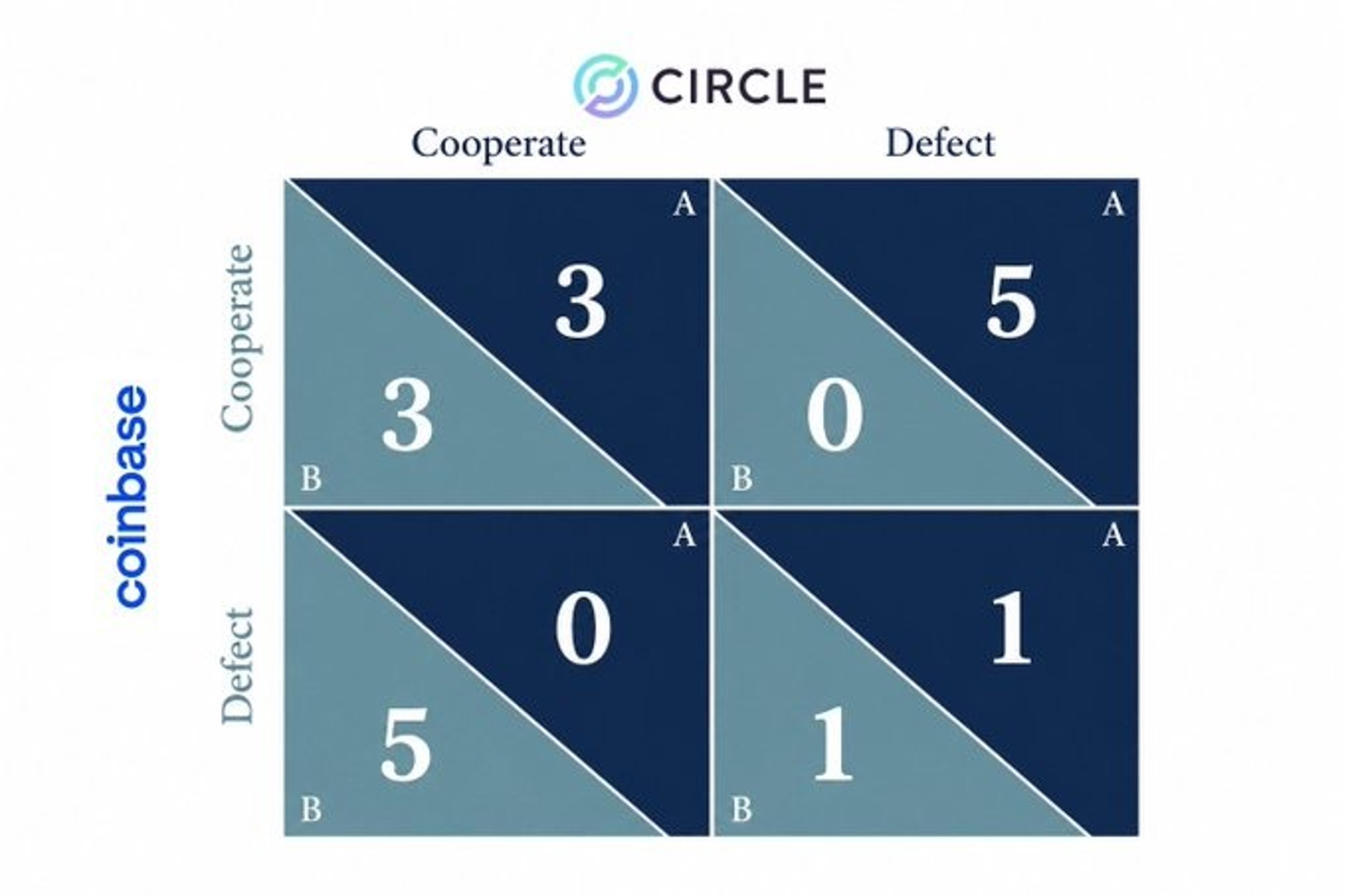
The last two months make the pressure clear:
- May 14: Hyperliquid dropped its own stablecoin for USDC; Circle and Coinbase ceded 90% of reserve income to Hyperliquid.
- Jun 30: The 140-firm Open Standard consortium launched OUSD, a no-fee coin routing most reserve income to distributors. CRCL fell 13–16%.
- Jul 10: The OCC approved Circle's federal trust bank charter; CRCL rebounded 14%.
CRCL has slid from a 52-week high of $263 to the $63 range, down 44.6% in June alone. The root cause is singular. Pricing power has shifted from the issuer to the distribution channel.
Where price stands
The soft June CPI gave crypto a modest lift, but the rebound remains fragile. Neither BTC nor ETH has broken its key resistance, spot inflows are still absent, and leverage building on top of a thin spot base is leaving the market increasingly exposed.
Leverage vs. Spot Liquidity
BTC exchange leverage now sits in its top 5% historical extreme, with borrowed margin far outstripping spot liquidity. This setup makes the market increasingly vulnerable to a sharp deleveraging event if prices turn lower.
The tell is a structural divergence. BTC has fallen nearly 50% in six months, from the $126K October high to around $60K, yet on-chain data shows leverage has not contracted alongside price.
Exchange BTC Leverage Pulse: exchange open interest divided by exchange stablecoin reserves.
Open interest is the total leveraged positioning deployed in the market; stablecoin reserves are the dry powder on hand to buy or absorb selling.
A high ratio means the borrowed money in the market far exceeds the spot capital available to catch a flush.
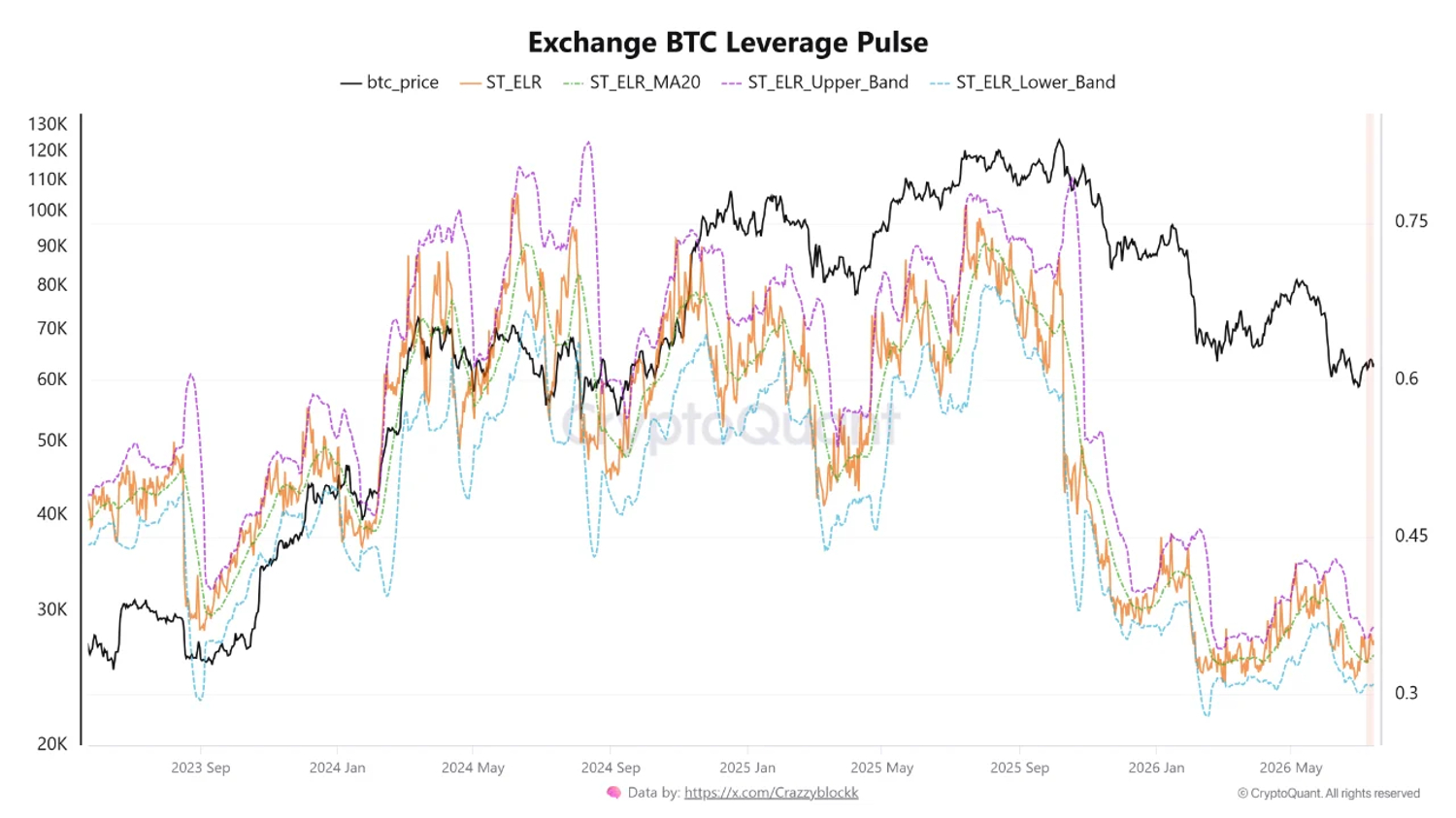
That ratio has recently broken above its historical upper-band risk threshold and remains well above its historical average, meaning the current rebound is built on borrowed margin with no spot liquidity underneath it. Traders are running on fumes.
Historically, every BTC price rally has coincided with this ratio pushing up to a high, the two moving in sync. Right now the indicator is still languishing near its historical lows, hugging the lower band, with no sign yet of turning higher.
ETF Outflows & Absent Spot Demand
The leverage signal is not isolated. Spot BTC ETFs posted their worst month since launch in June, with $4.51B in net outflows. Early July brought a brief pause, with $510M of inflows over July 2–6, roughly 41% of it from BlackRock's IBIT. Against $5.4B of net outflows year-to-date, that is a drop in the bucket.
The bleed bites through its transmission mechanism: redemptions force authorized participants to sell the underlying BTC on spot, and ETF flows now explain 45% of BTC's weekly moves. This is rules-driven selling, not sentimental noise.
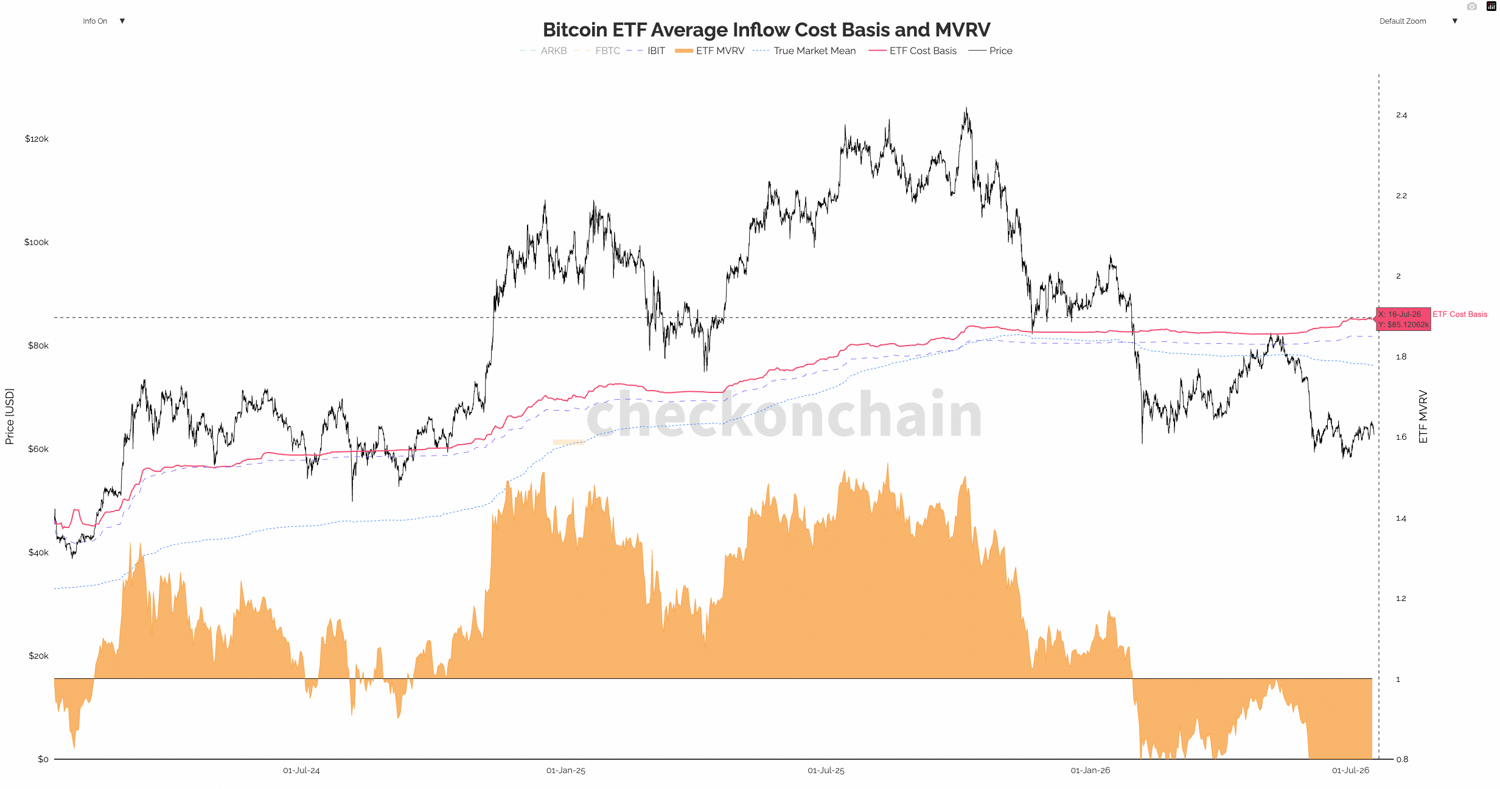
The average ETF buyer's cost basis is $85K; with BTC near $64K, the typical holder is down more than 23%, and underwater holders sell into strength, capping any return of inflows.
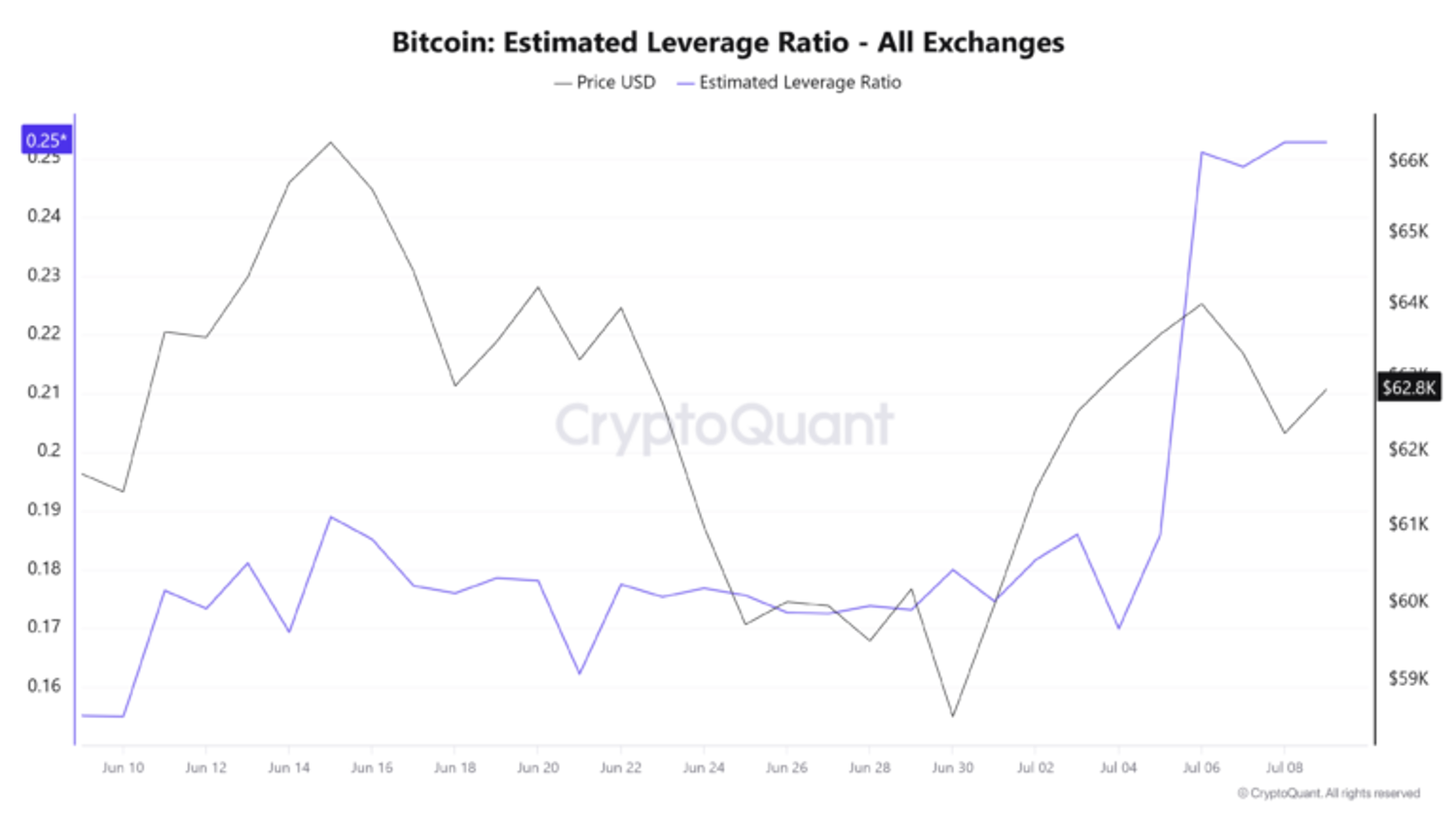
BTC’s Estimated Leverage Ratio rebounded sharply from its June 30 low of 0.156 to 0.25, the highest in the observation window; OI has stopped falling and funding has turned positive, a mild long bias.
But stablecoin inflows and ETF flows have not matched prior bull-phase levels, leaving the market exposed to volatility shocks.
BTC remains caught between a well-established support zone and declining overhead resistance, leaving price action vulnerable to further range-bound volatility until the July 28–29 FOMC provides a clearer macro catalyst.
Markets price 90% odds of a hold on July 29, with tail risk skewed toward a hike, not a cut. In that monetary setting, the pressure on BTC as a high-beta risk asset stays firmly to the downside.
Week Ahead
- Ongoing: CLARITY Act Senate floor window (before Aug 8 recess)
- Ongoing: Strait of Hormuz blockade
- Jul 23: U.S. Initial Jobless Claims
CLARITY Act is the week's dominant swing factor. Trump stepped directly into negotiations, meeting senators Thursday to break the ethics deadlock, but prediction-market odds of 2026 passage have fallen to 35%, the lowest yet, as the merged Senate draft still sits short of the 60 votes needed.
The live macro tail is the Strait of Hormuz blockade: oil is the variable to watch, since a fresh crude spike is what would flip the market's read of the soft June CPI from dovish to hawkish.
Disclaimer: The information provided herein does not constitute investment advice, financial advice, trading advice, or any other sort of advice, and should not be treated as such. All content set out above is for informational purposes only.