
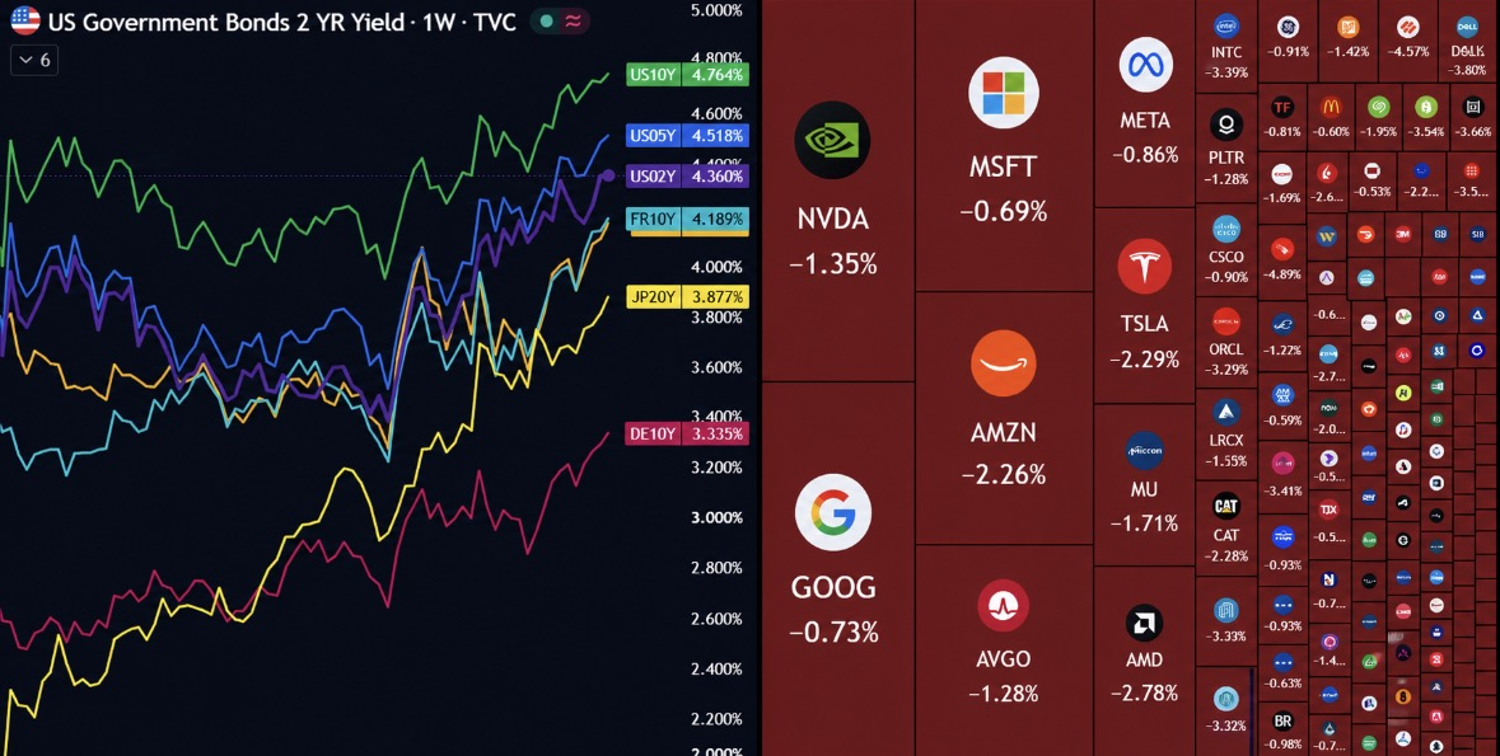
Global bond markets are flashing another warning. Long-term government yields across the U.S., Japan and Europe have surged to multi-year or multi-decade highs, while the U.S. 30-year Treasury yield briefly crossed 5.3%.
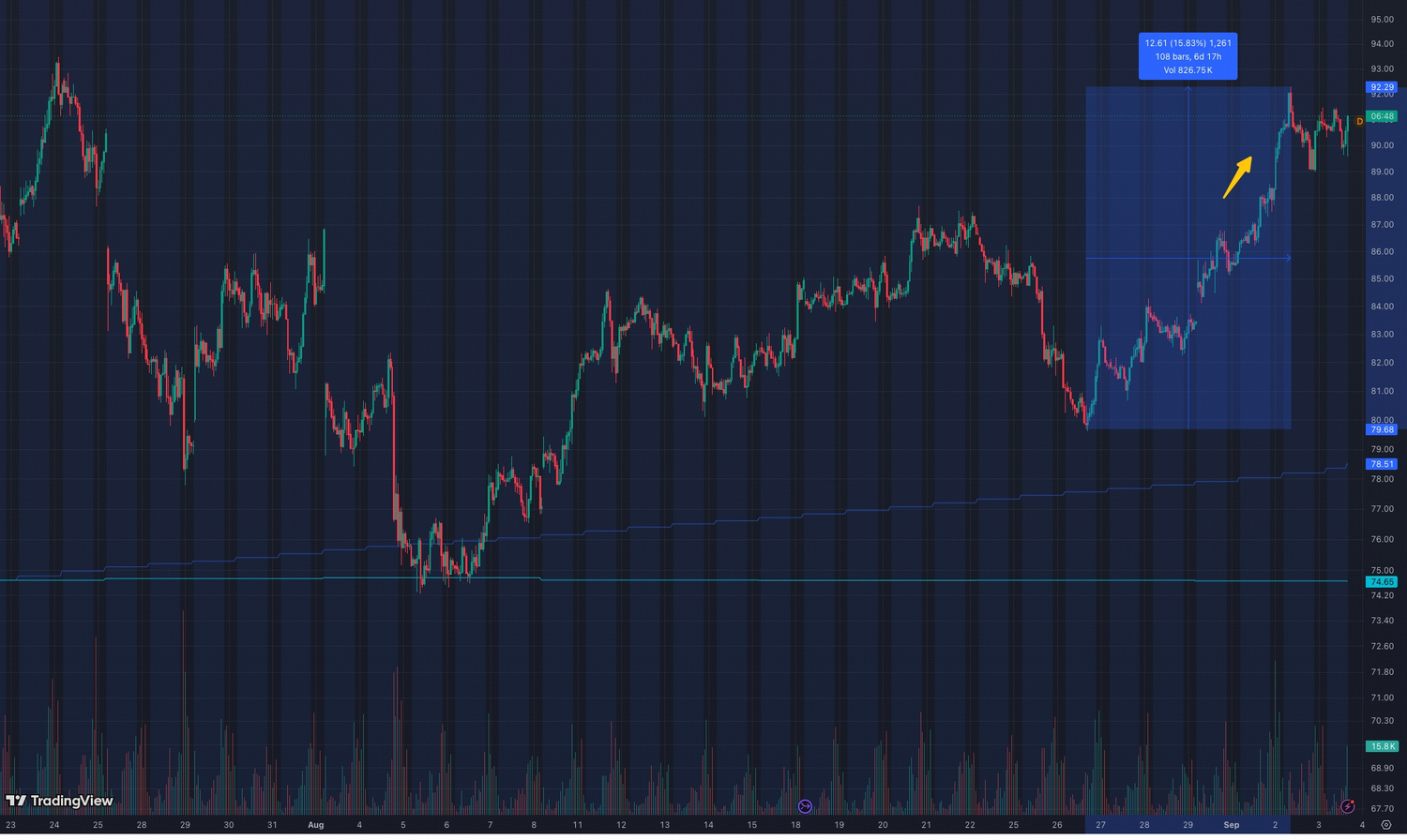
Risk assets have moved in the opposite direction. U.S. equities came under pressure, high-beta technology stocks weakened, and Bitcoin retreated toward $77K.
This appears to contradict the debasement trade. In our previous analysis, The Debasement Trade Has Entered Its Second Phase, we argued that investors demanding higher yields on long-term government debt signals growing concern over fiscal sustainability and ultimately strengthens the case for scarce assets.
If that thesis is playing out, why are Bitcoin and other risk assets falling?
Higher Yields Hurt First
In the short term, investors can now earn historically attractive returns from government bonds without taking comparable market risk.
With long-term Treasury yields around 5%, the hurdle for holding Bitcoin, AI stocks and other high-volatility assets rises. Capital has less incentive to reach for risk when government debt already offers a substantial yield, drawing some liquidity away from risk assets. Higher market rates also increase borrowing costs and raise the discount rate applied to future earnings, putting additional pressure on growth stocks and other high-beta assets.
This explains why BTC and U.S. technology stocks have weakened alongside the latest rise in government bond yields. Bitcoin may have a long-term monetary narrative, but over shorter horizons it still behaves like a risk asset and remains highly sensitive to liquidity and the cost of capital.
Other macro pressures have added to the selloff.
Escalating U.S.-Iran tensions have pushed oil prices sharply higher, raising concerns that higher energy costs could keep inflation elevated. Meanwhile, recent comments from Fed Chair Kevin Warsh have been interpreted as hawkish, pushing market-implied odds of a September rate hike above 60% and adding further pressure to Bitcoin and high-beta equities.
The Debasement Trade Is Not Broken
The longer-term implications of the bond selloff point in a different direction.
Investors selling long-duration government bonds are demanding greater compensation for holding sovereign debt. Rising yields then increase the government’s refinancing costs and interest expense, putting further pressure on already large fiscal deficits.
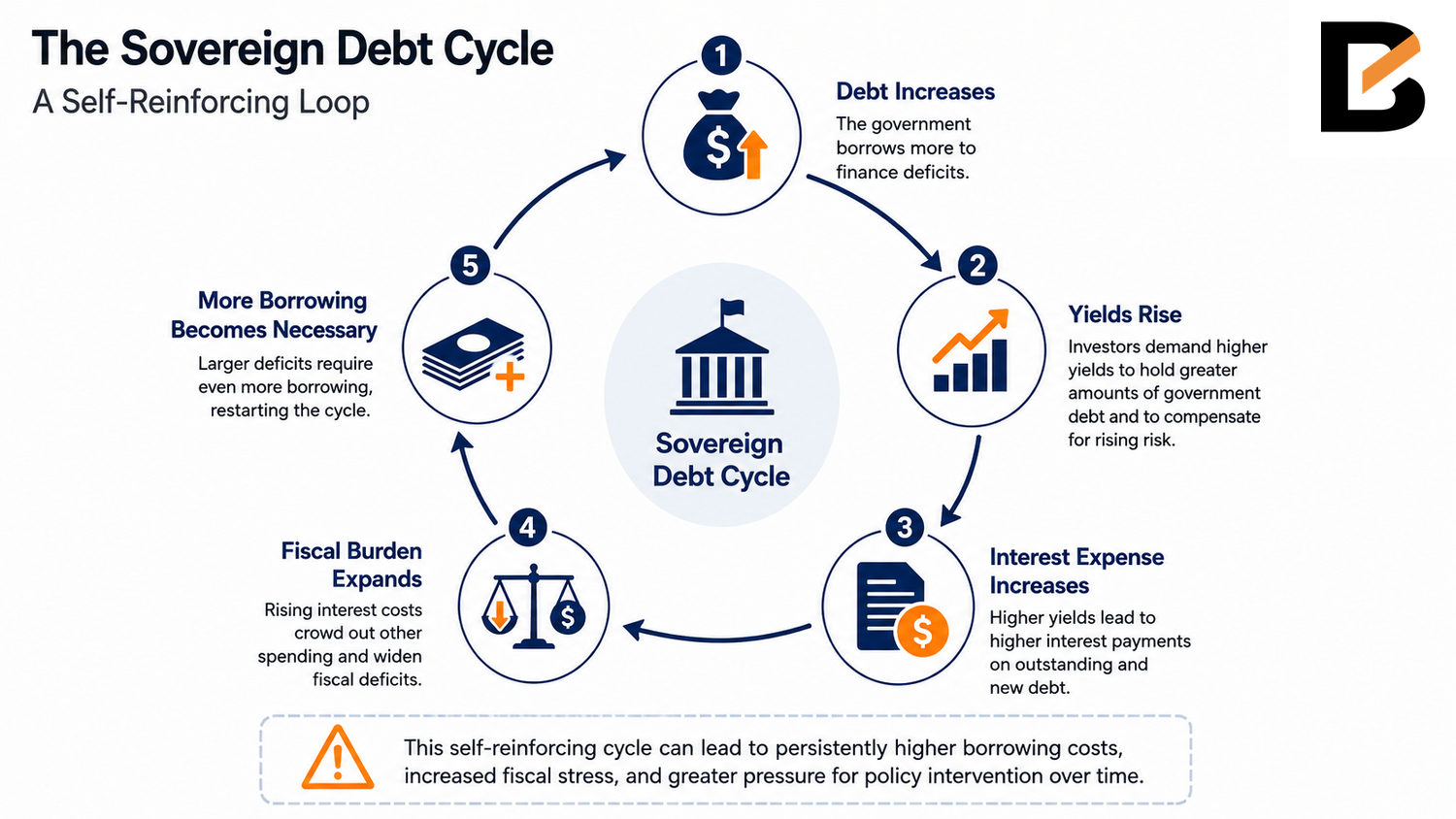
The higher borrowing costs rise, the harder it becomes for governments to allow market rates to remain elevated indefinitely. The U.S. Treasury has already responded by expanding its long-duration liquidity-support buybacks. The current scale is far too small to resemble QE or fundamentally change Treasury supply and demand.
If yields continue rising despite Treasury intervention, pressure for stronger measures grows. That could eventually include larger buybacks, changes to the maturity structure of Treasury issuance, or, under more severe conditions, greater monetary accommodation from the Fed.
Higher yields can therefore hurt Bitcoin today while strengthening the debasement thesis for tomorrow.
- In the short run, investors are pricing the immediate return available on government bonds and the tighter financial conditions created by higher rates.
- Over the longer run, persistently high borrowing costs can make the current fiscal path increasingly difficult to sustain and increase the likelihood of policies designed to suppress financing costs.
What Comes Next for Bitcoin?
For now, Bitcoin is caught in a tug-of-war. High Treasury yields are drawing liquidity away from risk assets, while growing fiscal stress is strengthening the longer-term debasement case.
Two developments could shift that balance in favor of hard assets:
- Loss of confidence in government debt. If yields continue rising because investors demand a much larger premium for fiscal risk, Treasuries themselves become less attractive as a safe haven. Capital could increasingly rotate toward scarce assets such as gold and Bitcoin.
- Stronger policy intervention. Treasury’s expanded buybacks are already an early signal. If policymakers move further to contain borrowing costs, through larger interventions or eventually greater monetary accommodation, easier financial conditions could bring the debasement trade back into focus.
For Bitcoin, liquidity remains the common thread. Weaker-than-expected ADP employment data offered a clear example. It reduced expectations for a September Fed hike, and BTC quickly rebounded above $78K.
Bitcoin’s short-term path can change quickly. The next major move will depend on which side of this tug-of-war wins: attractive risk-free returns, or rising fiscal stress and stronger policy intervention.
Disclaimer: The information provided herein does not constitute investment advice, financial advice, trading advice, or any other sort of advice, and should not be treated as such. All content set out above is for informational purposes only.