
On September 16, the Fed raised the federal funds target range by 25 bps to 3.75%–4.00%, its first hike since 2023. The message remained hawkish: 16 of 18 policymakers still see at least one more hike this year.
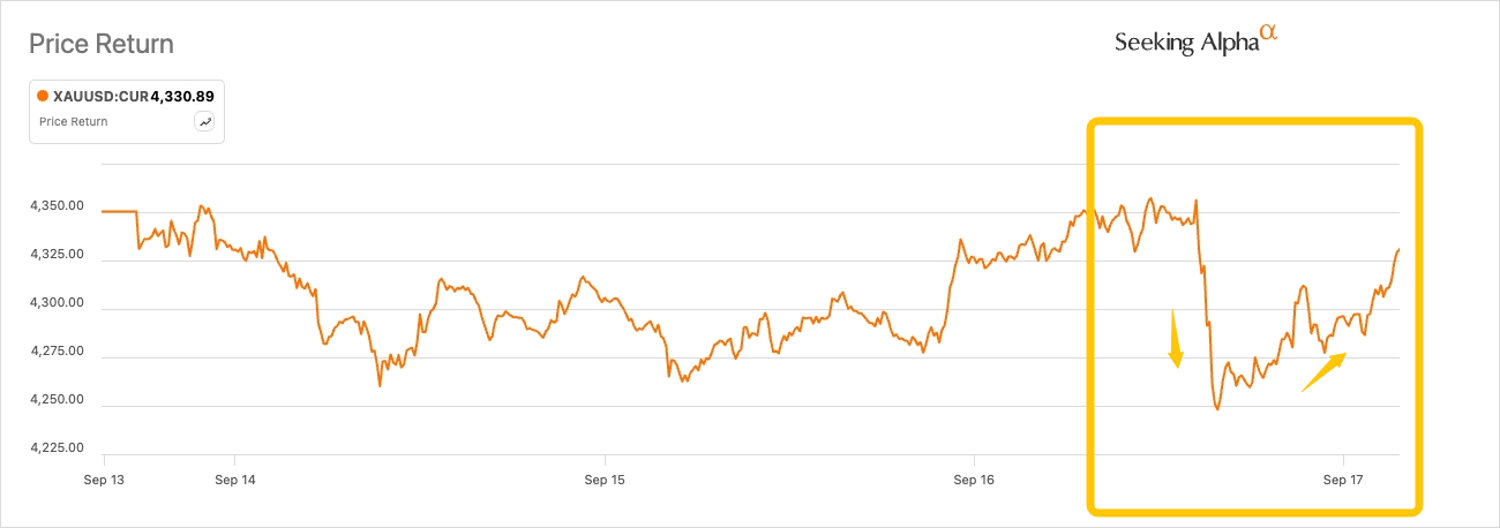
Gold initially reacted exactly as higher rate logic would suggest. After the decision, spot gold quickly fell from around $4,360 to roughly $4,240.
But the rebound came almost as fast. 12 hours after the announcement, gold was back near $4,330, roughly where it had traded before the decision.
For a non-yielding asset, higher interest rates are normally a clear headwind. Gold felt that pressure immediately. What stands out is how little of the weakness lasted.
The 10-Year Hit 5%. Gold Held Up.
The same resilience extends beyond the Fed decision.
The 10-year Treasury yield has climbed to around 5%, its highest level since 2007.
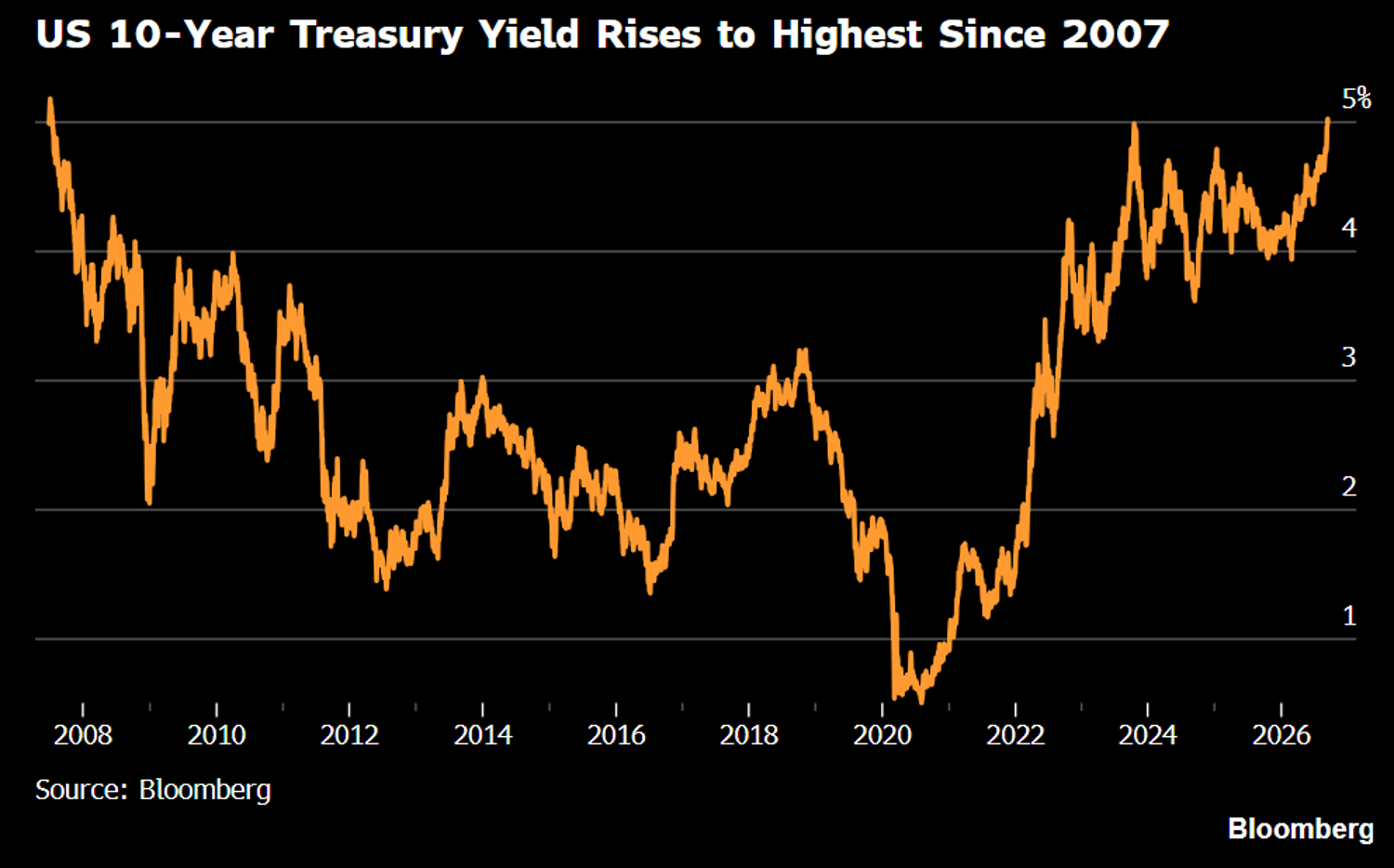
That would normally make life harder for gold. Higher risk-free yields increase the opportunity cost of holding an asset that pays no interest.
But gold moved higher alongside yields.
Gold ended July near $4,000 per ounce, then rallied as much as 16.5% in August to a high around $4,660, even as long-term Treasury yields continued moving toward 5%.
Higher rates are still creating pressure, but that pressure has not translated into lasting weakness in gold.
Why Isn’t Gold Following the Old Script?
The traditional chain is straightforward:
Higher oil prices → Higher inflation risk → Tighter Fed policy → Higher Treasury yields → Stronger dollar → More pressure on gold.
But the current environment is unusual.
Oil prices are elevated partly because of the ongoing conflict in the Middle East and uncertainty over energy supply. After the Saudi East-West pipeline was attacked, there is still no clear timeline for a full return to normal operations.
The same geopolitical risks adding to inflation pressure are also strengthening gold’s role as a safe haven.
Rate hike expectations, higher risk-free yields, a stronger dollar and elevated oil prices are all creating short-term pressure on gold. But safe-haven demand driven by geopolitical risk, together with strong long-term structural buying, has provided an effective offset and kept gold resilient at key levels.
Central Banks Keep Buying
Reported central-bank purchases returned to a net 23 tonnes in July, taking reported year-to-date purchases to roughly 130 tonnes. Central-bank net demand reached 289 tonnes in the second quarter, a record for the second quarter.
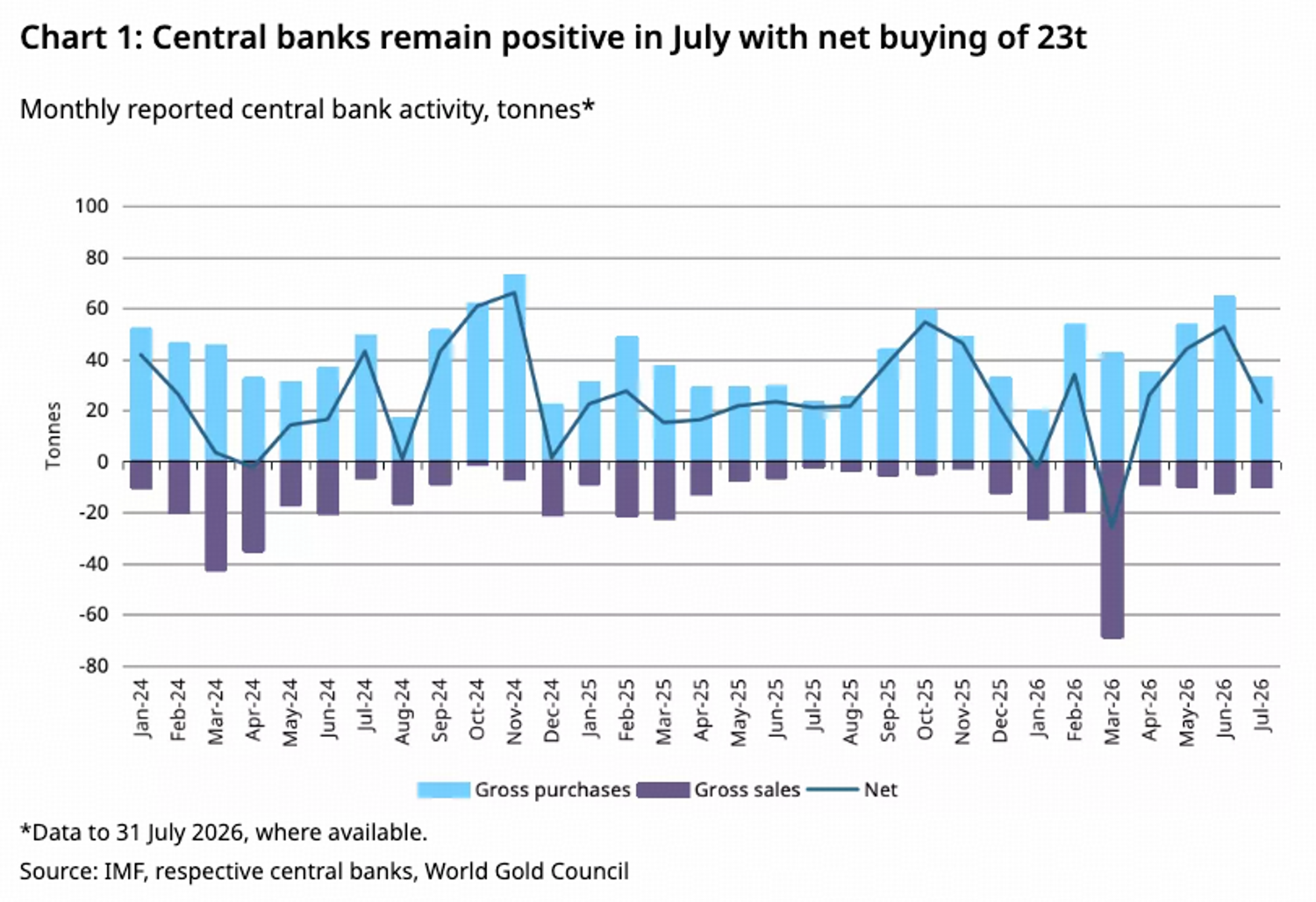
Notably, China added another 20.2 tonnes in August, its largest monthly increase since October 2023. That extended its buying streak to 22 consecutive months and lifted official holdings to 2,387 tonnes. Purchases have been in double digits each month since May.
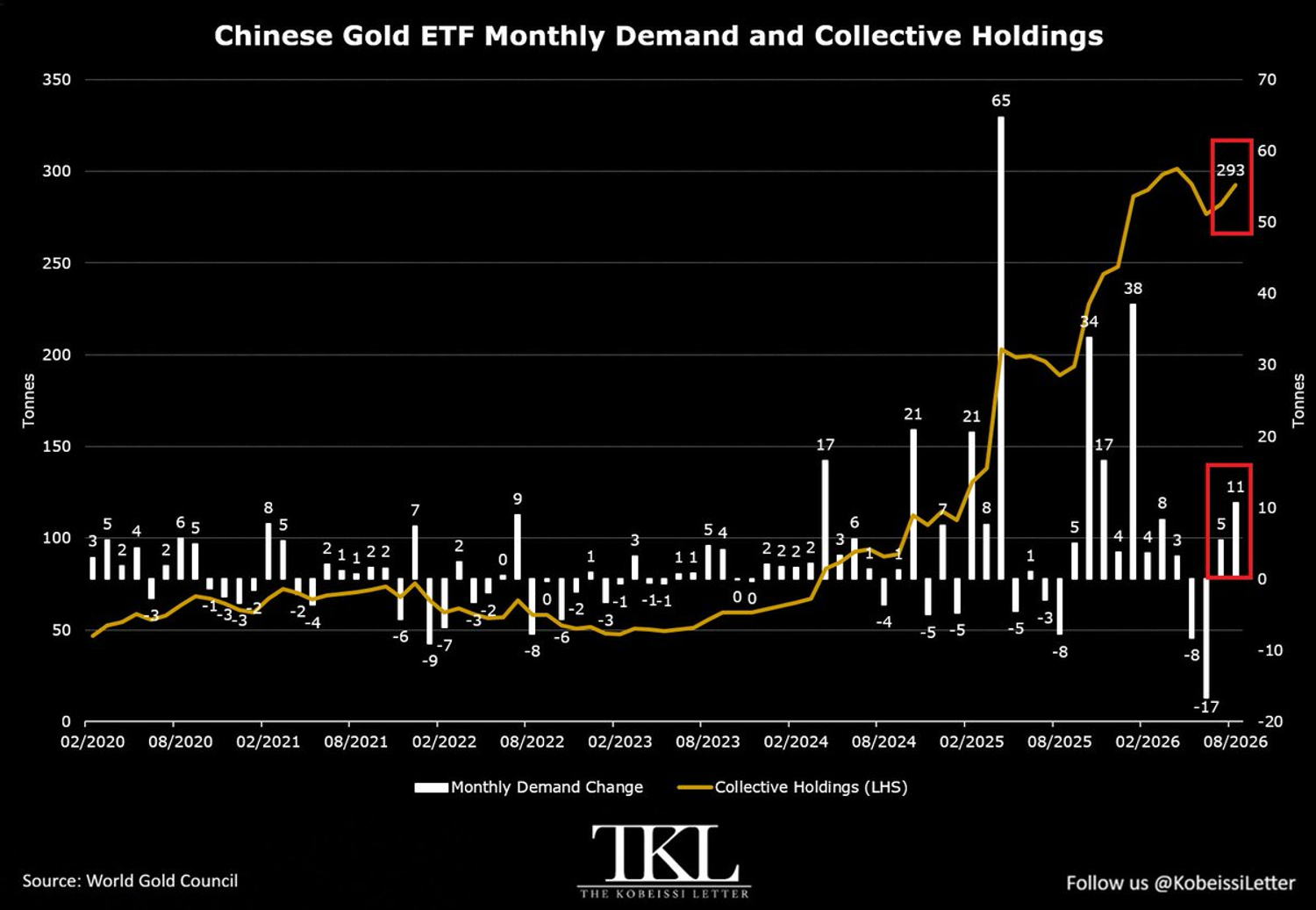
Chinese investors have been adding exposure as well. Gold ETFs in China took in another 11 tonnes in August, lifting collective holdings to 293 tonnes.
The picture is consistent: even with gold trading near historical highs, both official and investor demand in China remain strong.
ETF Demand Remains Strong
Global physically backed gold ETFs added 121 tonnes in August, equivalent to roughly $18 billion of inflows. Holdings reached a record 4,189 tonnes, while assets under management rose 16% month over month to $615 billion.
The timing matters. These inflows arrived while markets were repricing the Fed toward tighter policy and long-term Treasury yields remained elevated. The part of the gold market that should be most sensitive to the opportunity cost of higher rates was still adding exposure.
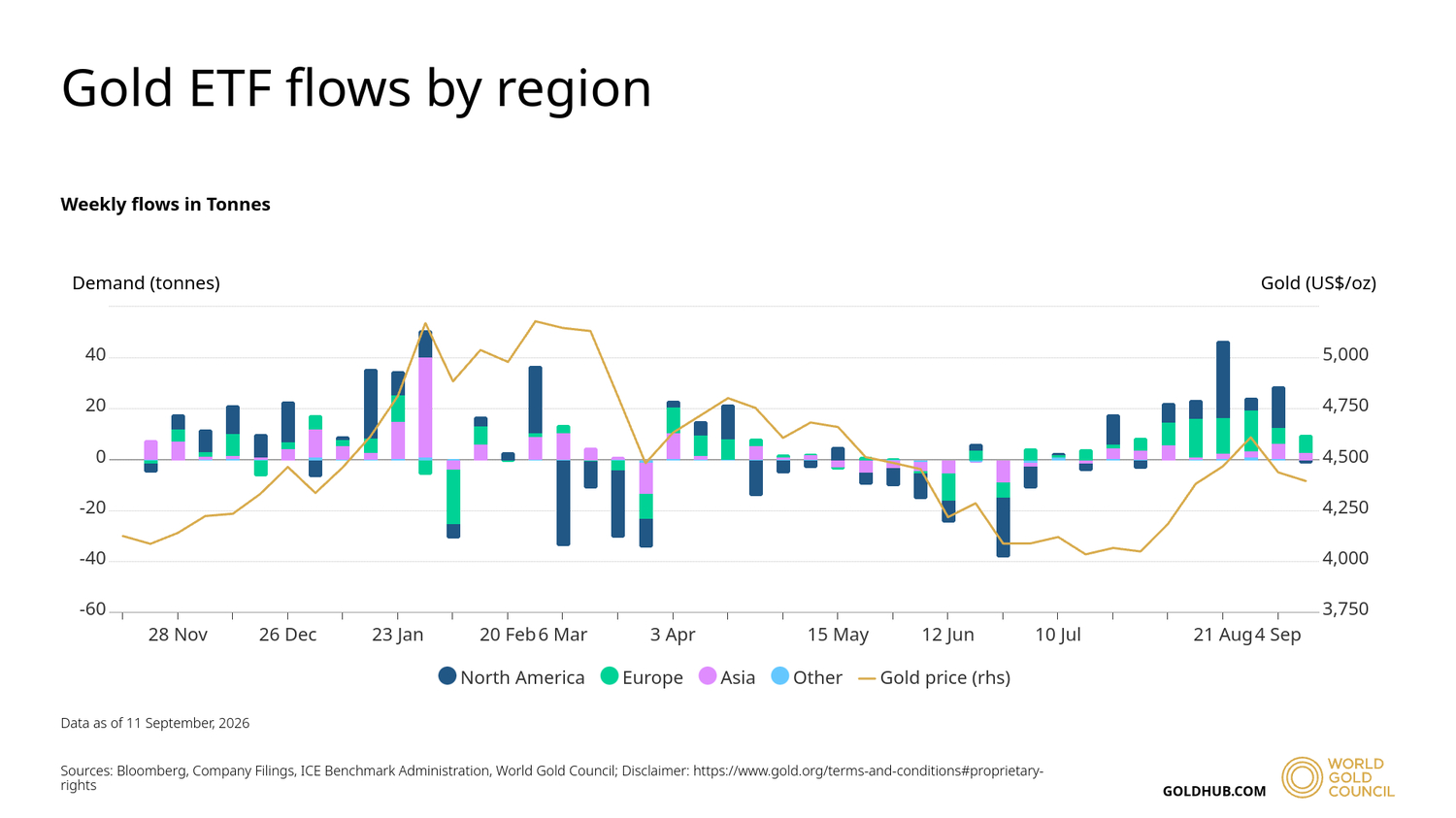
Higher yields remain a headwind. But they are competing with two powerful sources of demand: reserve diversification by central banks and renewed portfolio allocation from private investors.
How Institutions Are Pricing Gold’s Outlook
Major institutions are not ignoring the risks from higher rates, but several still expect gold to trade higher over a longer horizon.
- UBS: Has an end-2026 target of $4,600 and sees gold reaching $5,400 by September 2027.
- Goldman Sachs: Cut its end-2026 gold forecast by $500 to $4,900 in June after dropping its expectation for Fed rate cuts in 2026. It still sees continued central-bank diversification as a key source of support.
- J.P. Morgan: Has become more cautious in the near term. In July, the bank cut its Q4 2026 gold forecast by 25% from a month earlier to $4,500, citing weaker demand and the possibility of further Fed hikes.
Overall, these forecasts remain constructive relative to current gold prices, but they also reflect growing caution around the Fed’s tightening path and higher rates.
Higher real rates and a stronger dollar can still pressure gold, while central-bank buying, geopolitical uncertainty and renewed ETF demand continue to provide support. Gold’s price dynamics are becoming more complex, with a broader set of forces increasingly shaping its direction.
Disclaimer: The information provided herein does not constitute investment advice, financial advice, trading advice, or any other sort of advice, and should not be treated as such. All content set out above is for informational purposes only.