
- The market is reassessing three assumptions behind the AI buildout: how quickly current capex will generate returns, how is all of this being financed, and whether AI token and compute demand can continue expanding at the pace investors previously expected.
- Thin summer liquidity likely amplified the volatility. Trading activity typically remains subdued through August and into early September, while August and September have historically been among the weakest months for U.S. equities.
- The sharpest phase of the sell-off may have passed, though the AI trade could remain in consolidation through September.
We wrote in June that the AI infrastructure trade might be entering a digestion phase. Our view was that AI infrastructure equities were due for a correction even as the long-term investment case remained intact.
As we wrote then:
"Equity prices respond to the slowdown signal before the cause is verifiable, which creates a window for correction within an intact long-term trend."
— Market Brief: AI Infrastructure Trade Is Due for a Pause (June 2)
The correction arrived, and it proved much deeper than the pause we anticipated. Across AI infrastructure, several of the market's highest-flying names have fallen 40–60% from their peaks.
The concerns behind the selloff, however, remain largely unresolved. In June, we argued that the digestion phase would resemble weakening demand. That has not happened. Demand for compute has remained robust. What changed was investors' willingness to fund enormous upfront spending while waiting for returns.
What Caused the Drop
As Apollo put in a recent analysis, the market is asking three fundamental questions:
- Will the AI capex pay off, and how quickly?
- How is all of this being financed, and at what spread?
- Will there be unlimited demand for compute, or will compute demand peak?
The first question is about the timing of returns on AI capital spending. Companies have committed trillions of dollars to data centers, chips, and power infrastructure before those assets generate revenue.
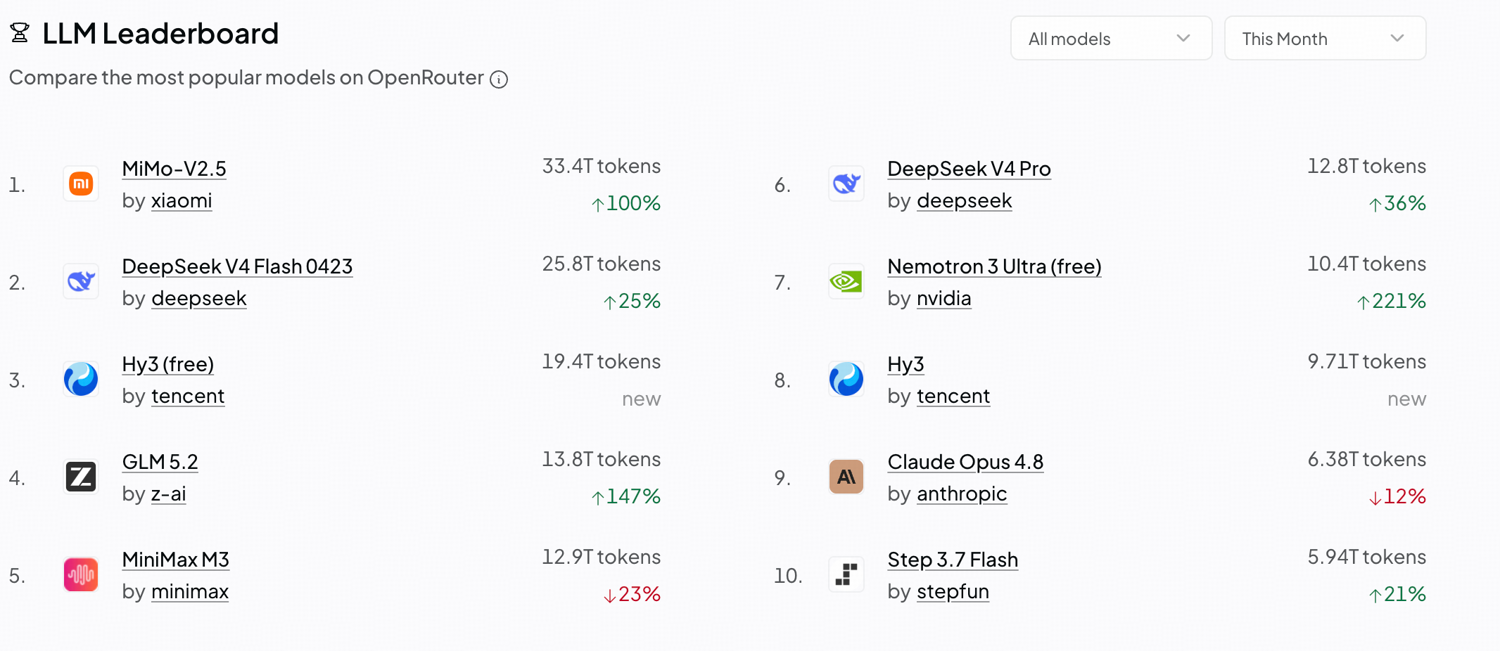
At the same time, token prices continue to fall. Tokens are the units used to measure the text and other information processed by AI models, and lower prices reduce the revenue generated from each unit of usage. Competitive pressure is also increasing. Chinese models have gained usage share and now leads US models in token usage among the top 20 models tracked by OpenRouter. Lower unit pricing and greater competition could push monetization further into the future.
Chinese model lead in token usage
And the second question: How is all of this being financed, and at what spread? Financing stress is already visible in the credit market. The AI buildout is becoming increasingly dependent on debt, and the bond market is showing strain in absorbing a rapidly growing volume of issuance. AI-related borrowing has totaled roughly $350 billion in the past five years, and hyperscalers are now on pace to rival the six largest US banks as the top issuers in investment grade bond.
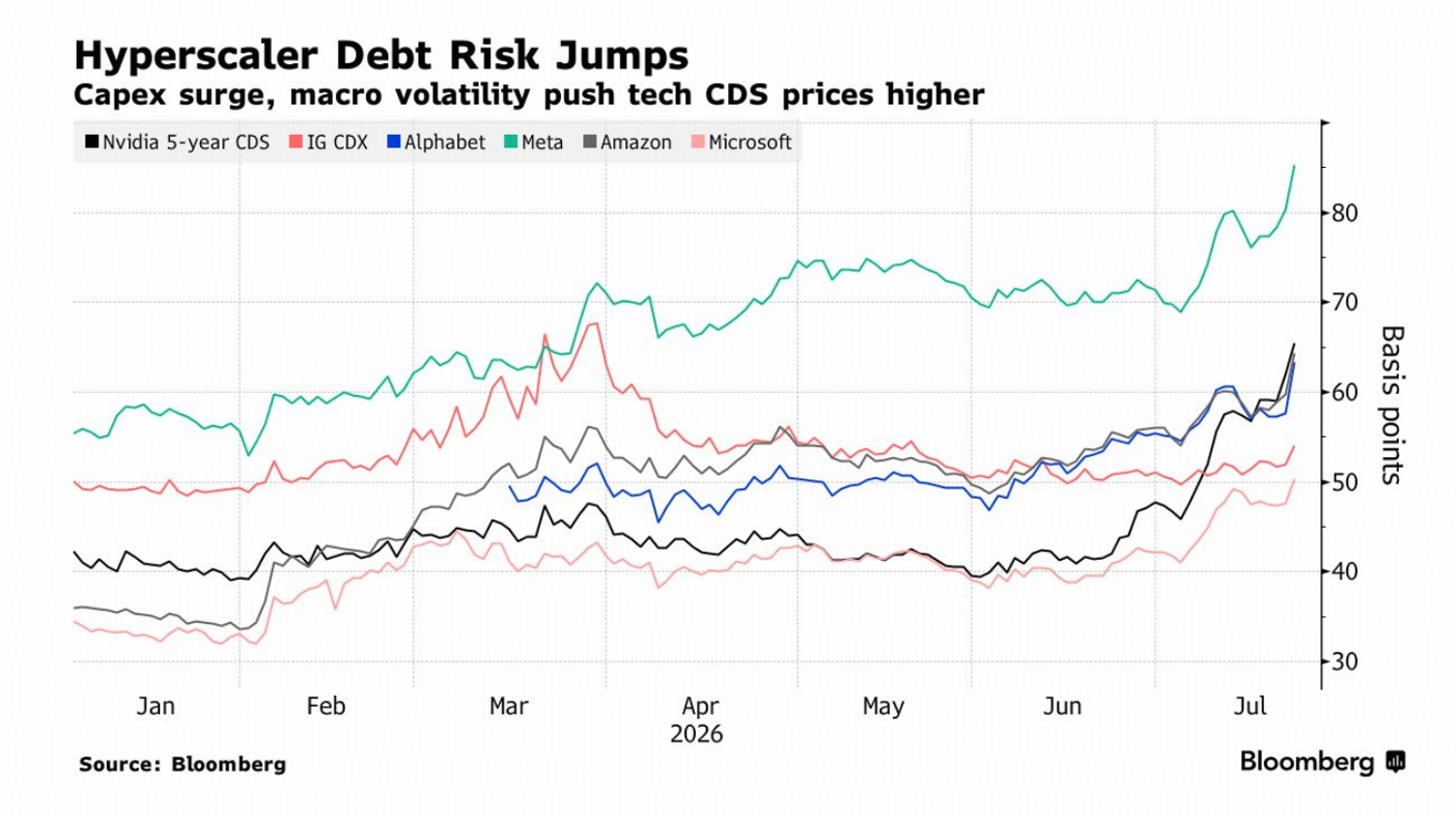
The repricing is visible in both credit-default swaps and corporate bond yields. CDS spread, the cost of insuring tech companies' debt against default, has risen sharply as investors question whether the returns from AI investment will justify the capital committed. CDS spread for companies including Nvidia, Alphabet, Meta, Amazon have risen sharply, with corporate bond yields rising alongside.
The third question is the hardest to answer. Will there be unlimited demand for compute, or will compute demand peak? The bull case assumes that compute demand will continue to increase as inference workloads expand, agentic systems scale. The bear case focuses on efficiency and model commoditization. Newer models can complete more work with less compute, while falling token prices reduce the revenue attached to each unit of usage. If efficiency gains outpace the growth in AI workloads, demand for compute capacity could plateau.
These three questions are structural and will remain central to the AI trade. Investor confidence will rise and fall with the evidence around them: faster monetization, lower financing costs, and stronger capacity utilization will support valuations, while slower payback, wider credit spreads, and weaker utilization will weigh on them. At present, the balance of evidence leans negative, leading to AI trade positioning reset.
Summer Consolidation Could Extend Into September
Seasonally lighter participation likely amplified the market volatility. Equity trading activity typically declines during the summer, and research has found turnover drops during summer time across major markets.
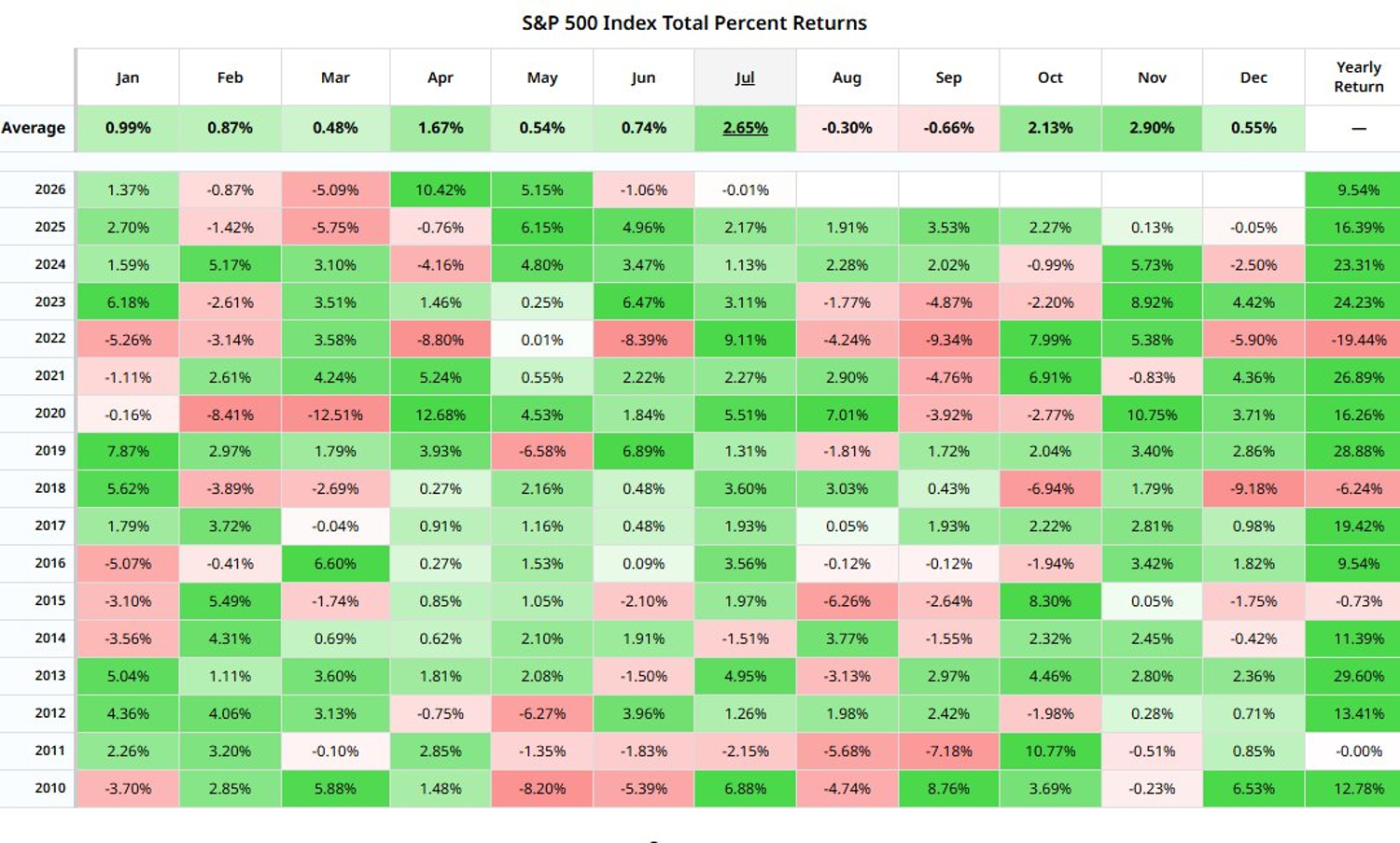
The historical pattern suggests that trading activity will remain subdued through August before returning closer to normal during September. The return backdrop also becomes less favorable in late summer. August and September have historically been among the weaker months for the S&P 500.
The sharpest phase of the sell-off may have largely passed. Lower participation and weaker late-summer seasonality still argue for a prolonged consolidation through August and into September, with selective rebounds in companies that can demonstrate near-term revenue growth and continued pressure on those returns remain distant.
Disclaimer: The information provided herein does not constitute investment advice, financial advice, trading advice, or any other sort of advice, and should not be treated as such. All content set out below is for informational purposes only.