
The Fed raised the federal funds target range by 25 bp to 3.75–4.00% on September 16, the first increase since 2023, on a unanimous 12–0 vote. The median dot for end-2026 moved to 4.1%, implying one further hike before year-end. The median remains at 4.1% for 2027.
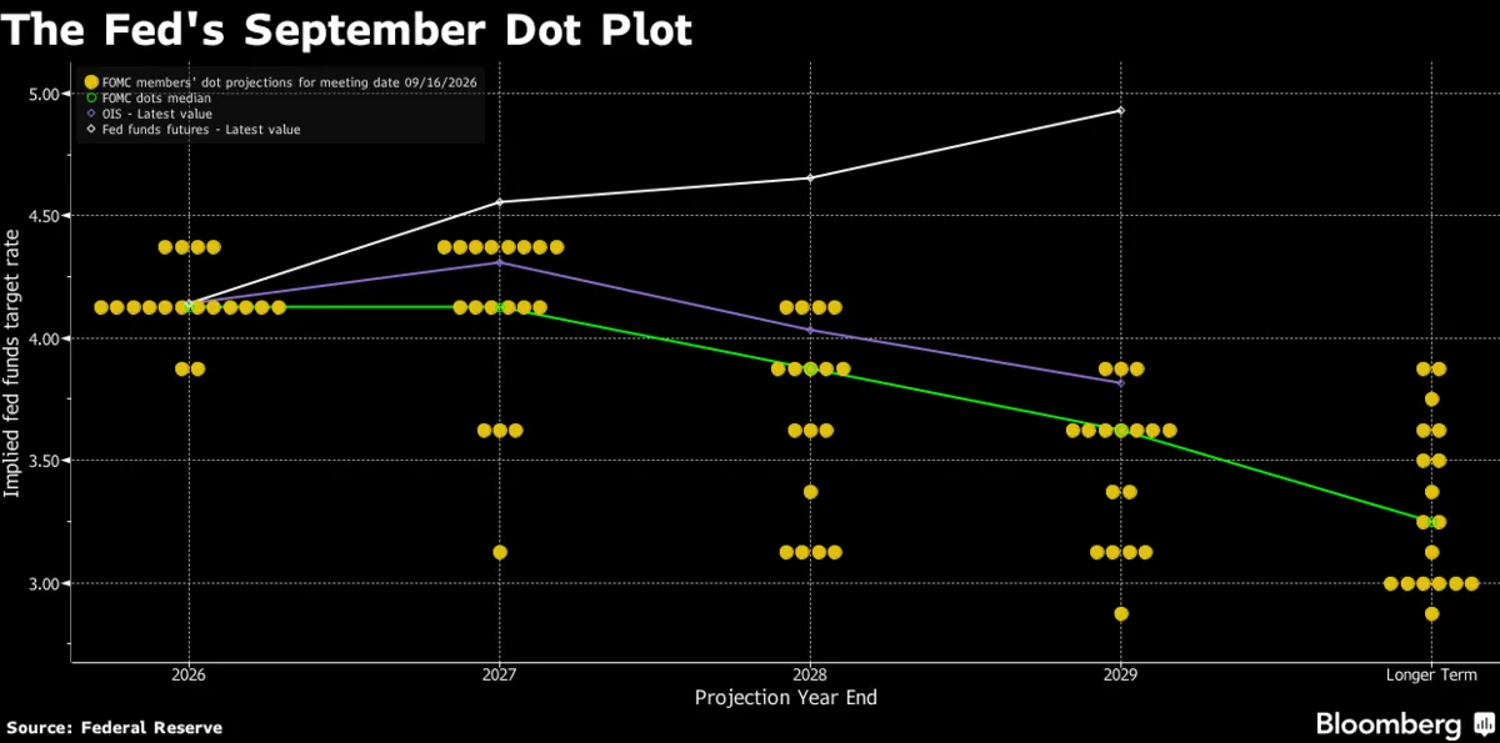
The message is clear: the Fed is now more concerned about inflation, and further tightening is now becoming easier to justify.
The more critical question now is how far this tightening will go.
We think the base case is one or two additional hikes, making a total of three rate hikes at most, and a larger tightening cycle would require a more significant change in the economic environment.
Another one or two hike are easy to justify
The Fed does not need an inflation surge to justify another 25-50 bp interest rate raise.
The September statement described economic activity as expanding at a “solid pace.”
Economic activity is expanding at a solid pace. While uncertainty remains elevated owing, in part, to geopolitical developments,domestic spending has been resilient. Productivity growth is strong, and capital investment is robust. Job gains have kept pace with the workforce, and the unemployment rate has changed little.
At the same time, the Fed Chair Kevin Warsh argued that policymakers need to be confident that the inflation is moving toward the 2% target "clearly and at sufficient speed".
Here is my standard: We must be confident that underlying inflation is moving to our objective, clearly and at sufficient speed. Otherwise, we have work to do. That's our job . . . our mandate . . . and our charge to keep.
That creates a relatively low bar for modest additional tigentening. If employment remains stable and inflation continues falling too slowly, the Fed can argue that policy simply needs to become somewhat more restrictive.
This is why one or two more hikes are very plausible. They require little more than a continuation of the current environment.
The bar becomes much higher beyond two more hikes
The logic changes once tightening moves substantially beyond roughly 75bp. At that point, the Fed would be moving beyond a limited policy adjustment and toward something resembling a new tightening cycle.
That would require stronger evidence that the underlying inflation regime itself has changed.
The current situation is very different from the previous hiking cycle
The post-pandemic inflation shock was supported by several powerful forces at the same time.
Fiscal policy injected extraordinary amounts of money into household balance sheets. Monetary policy had been pushed to near-zero rates alongside massive quantitative easing. Labor shortages became severe, forcing companies to compete aggressively for workers. Wage growth accelerated, households had accumulated large excess savings, and demand recovered much faster than supply.
The result was broad demand-driven inflation alongside supply constraints.
In the last tightening cycle, the labor market was a central inflation source
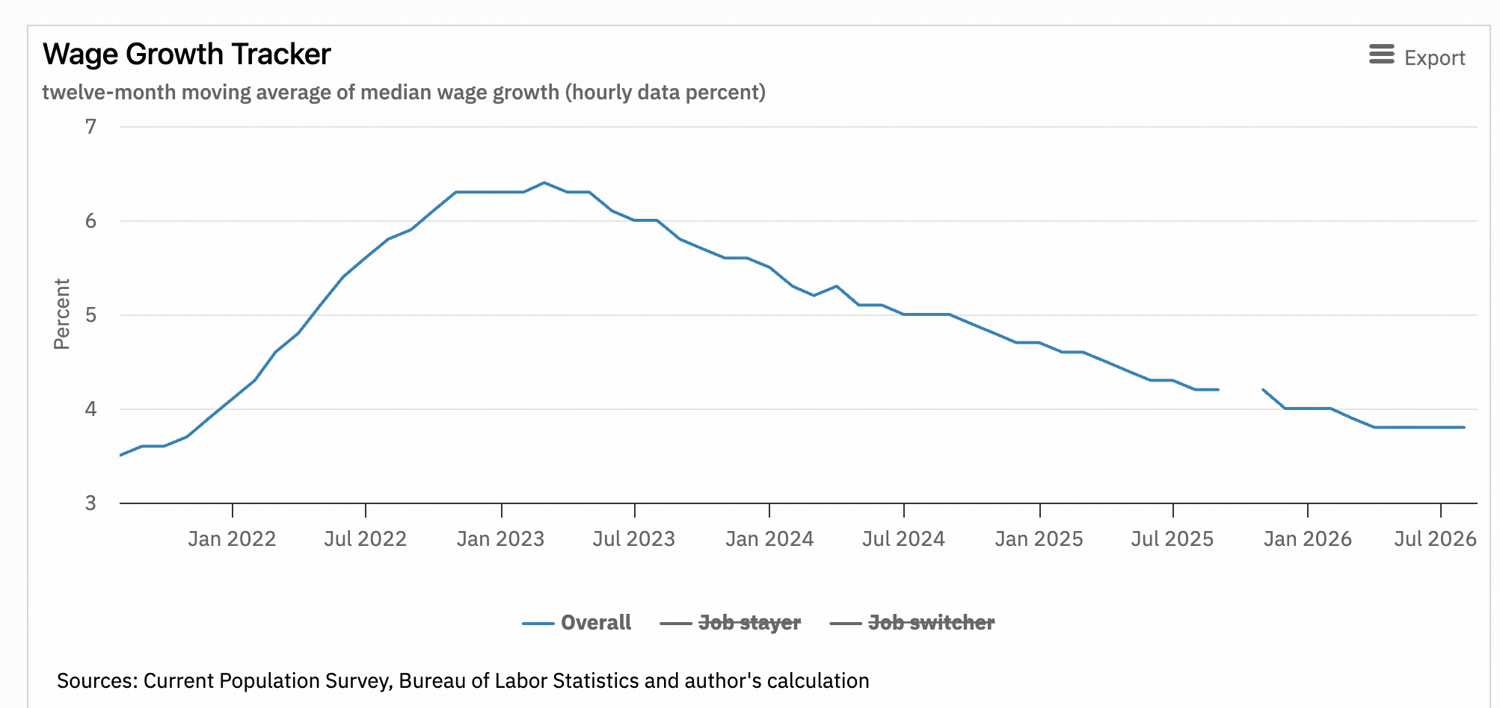
Today’s backdrop is very different. Fiscal policy is no longer delivering pandemic-scale transfers directly to households. Monetary conditions have remained relatively tight for years. Most importantly, the present inflation problem is more concentrated around persistent services inflation alongside supply-side pressures such as energy, tariffs and geopolitical disruptions. The labor market itself is currently not the primary source of inflation pressure.
Demand-driven inflation created by an overheating economy can be directly attacked through higher interest rates. Supply-driven inflation is more complicated: higher rates can suppress demand, but they cannot produce oil, remove tariffs or resolve geopolitical disruptions.
This does not mean the Fed can ignore supply shocks. After years of above-target inflation, repeated shocks can eventually influence business pricing, wage negotiations and household expectations.
But unless those shocks begin generating a broader wage-price dynamic, the case for returning to the kind of aggressive tightening seen after the pandemic remains much weaker.
Disclaimer: The information provided herein does not constitute investment advice, financial advice, trading advice, or any other sort of advice, and should not be treated as such. All content set out below is for informational purposes only.