
- Hyperscaler capex is now large enough to turn component shortages into pricing power, which explains the surge in memory names such as Micron and SK Hynix.
- The next constraint is likely power and data-center infrastructure, as AI demand must pass through grid capacity, electrical equipment, and thermal systems.
The most extreme price moves in the 2026 AI trade sit with memory producers. SK Hynix has gained more than 190% year-to-date, Micron is up roughly 150%.
Common explanations credit "AI capex" for the move, but it does not explain why specific suppliers re-rate sharply while others with similar AI exposure do not. Capex creates equity value when it reaches a layer of the supply chain that cannot expand at the same pace as spending.
Capex only matters when it reaches a binding constraint
Hyperscaler spending is now large enough to alter supplier economics. The four largest US cloud providers updated their 2026 capex guidance on Q1 2026 earnings calls in late April, bringing the combined range to $695B–$725B, roughly double what they spent collectively in 2025.
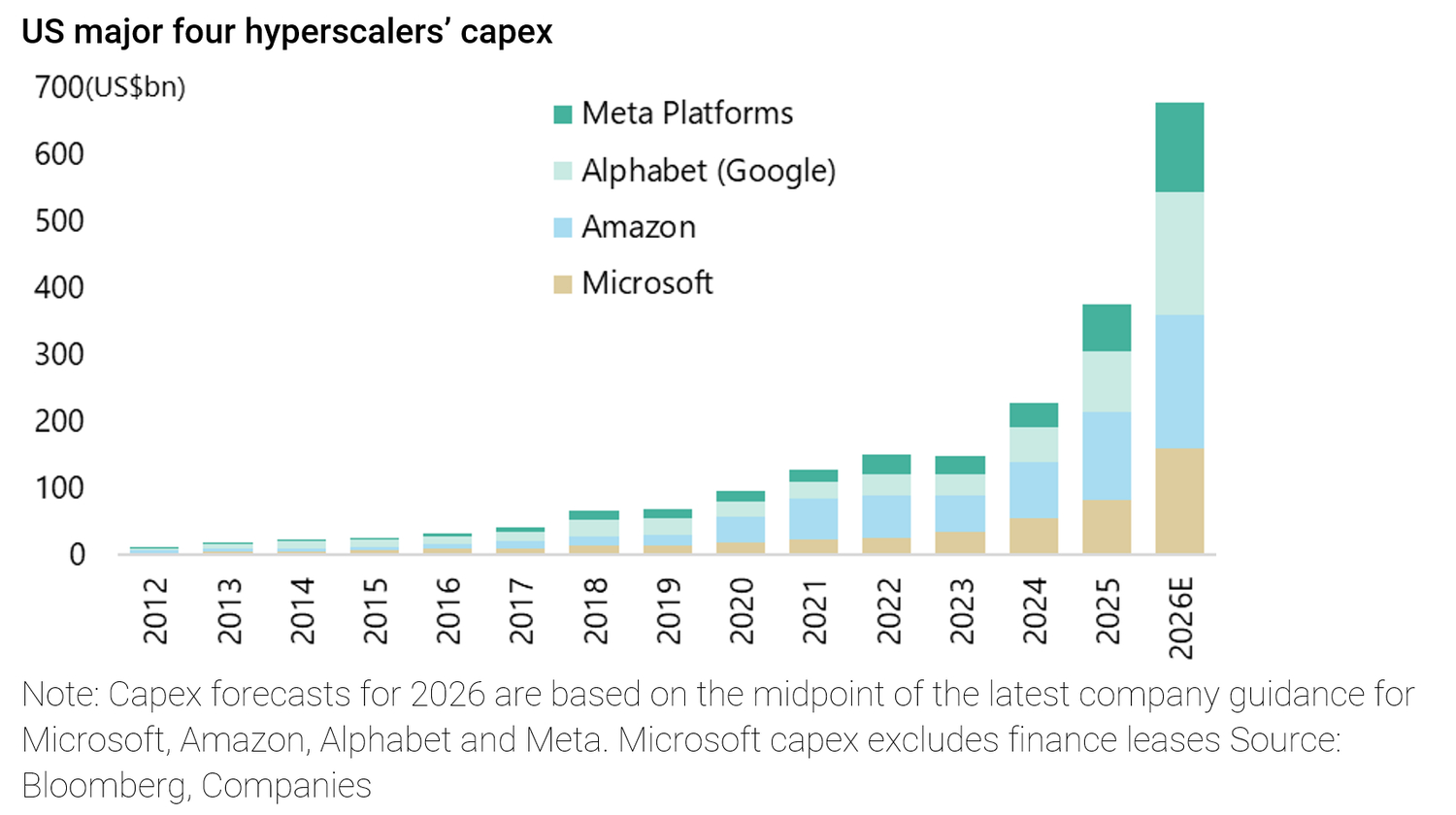
This spending does not benefit every supplier equally. The distinction is between flow-through revenue and scarce capacity. A server assembler can receive more orders while earning modest margins. A constrained memory supplier, electrical-equipment provider, or cooling vendor converts the same capex flow into pricing power, margin expansion, and firmer forward demand.
That distinction is the core of the "follow the money" thesis. The investable version is narrower: follow it to the choke points.
Micron, SK Hynix show how scarcity changes the income statement
The memory names sit in segments where demand moved faster than supply. AI servers require HBM, advanced DRAM, and high-density storage. When hyperscaler orders meet limited industry capacity, the result appears in revenue growth and gross margin.
Micron reported fiscal Q2 2026 revenue of $23.86 billion against $8.05 billion in the year-ago quarter, with GAAP gross margin of 74.4% versus 36.8%. Management cited tight industry supply and memory's role as a strategic asset for AI customers. SK Hynix's Q1 2026 revenue reached 52.58 trillion won ($35.55 billion), nearly triple the year-ago figure, with an operating margin of 72%.
As reported by Bloomberg:
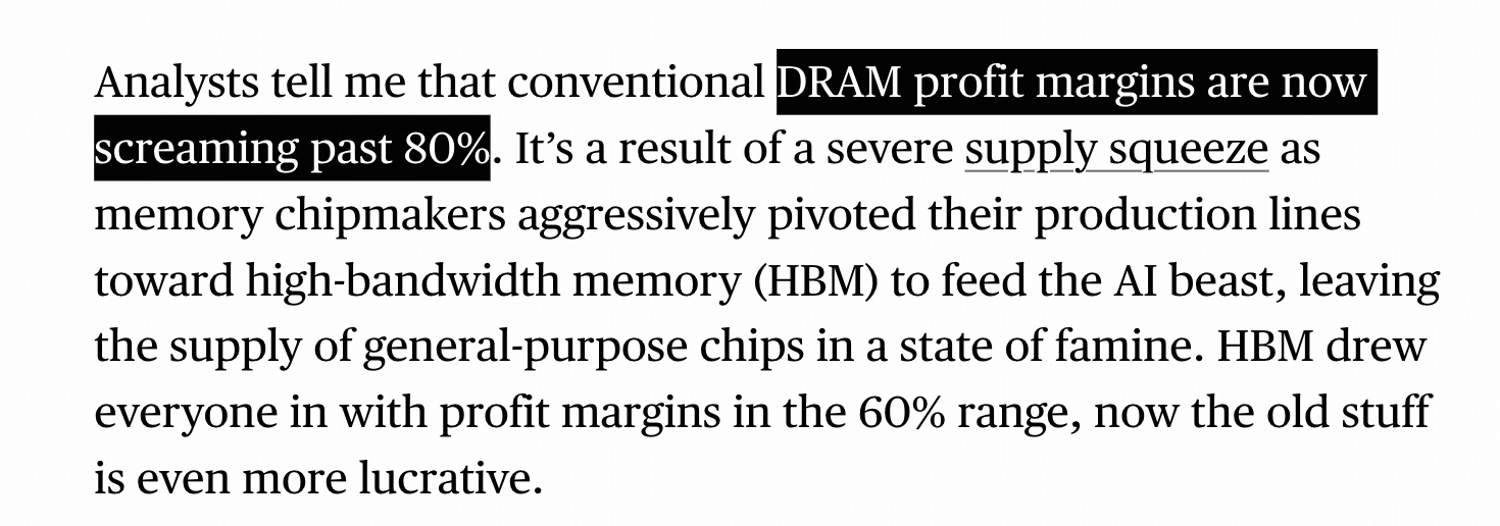
The move in SK Hynix, Micron, and SanDisk was not a delayed catch-up to the broad AI theme. It was driven by a more specific realization: AI servers require HBM at a scale the industry cannot supply quickly. When that supply gap became visible in earnings, 70%+ gross margins, sold-out 2026 capacity, multi-year commitments, the market repriced memory as a scarce input.
The binding constraint has shifted from chips to power & data-center infrastructure
AI demand can become deployed compute only if data centers secure grid access, transformers, switchgear, substations, backup power, and cooling capacity. The capex thesis therefore migrates from semiconductor availability to physical-infrastructure availability.
The International Energy Agency has warned that data centers create distinct challenges for electricity systems because they are large, concentrated loads that scale rapidly, often requiring new generation and grid investment.
Supplier order data already reflects this pressure with several example. Eaton is a power management company whose Electrical Americas segment produces the transformers, medium-voltage switchgear, switchboards, and circuit breakers that sit between the utility grid and a data center's internal power distribution, the first physical layer a new facility must install before a single server goes online. Transformer prices have risen roughly 80% over five years and large-unit lead times now stretch to four years. Eaton reported a 42% twelve-month rolling average order increase in Electrical Americas on data-center momentum and 48% year-over-year backlog growth in its Electrical sector; it has committed more than $1.5 billion to expand North American manufacturing capacity since 2023, with new transformer and switchgear facilities not reaching production until 2027.
Vertiv supplies the infrastructure layer inside the data center: uninterruptible power supplies, power distribution units, and thermal management systems including direct-to-chip liquid cooling for high-density AI racks. Vertiv reported Q1 2026 net sales of $2.65 billion, up 30% year over year, with Americas organic sales up 44% on data-center demand.
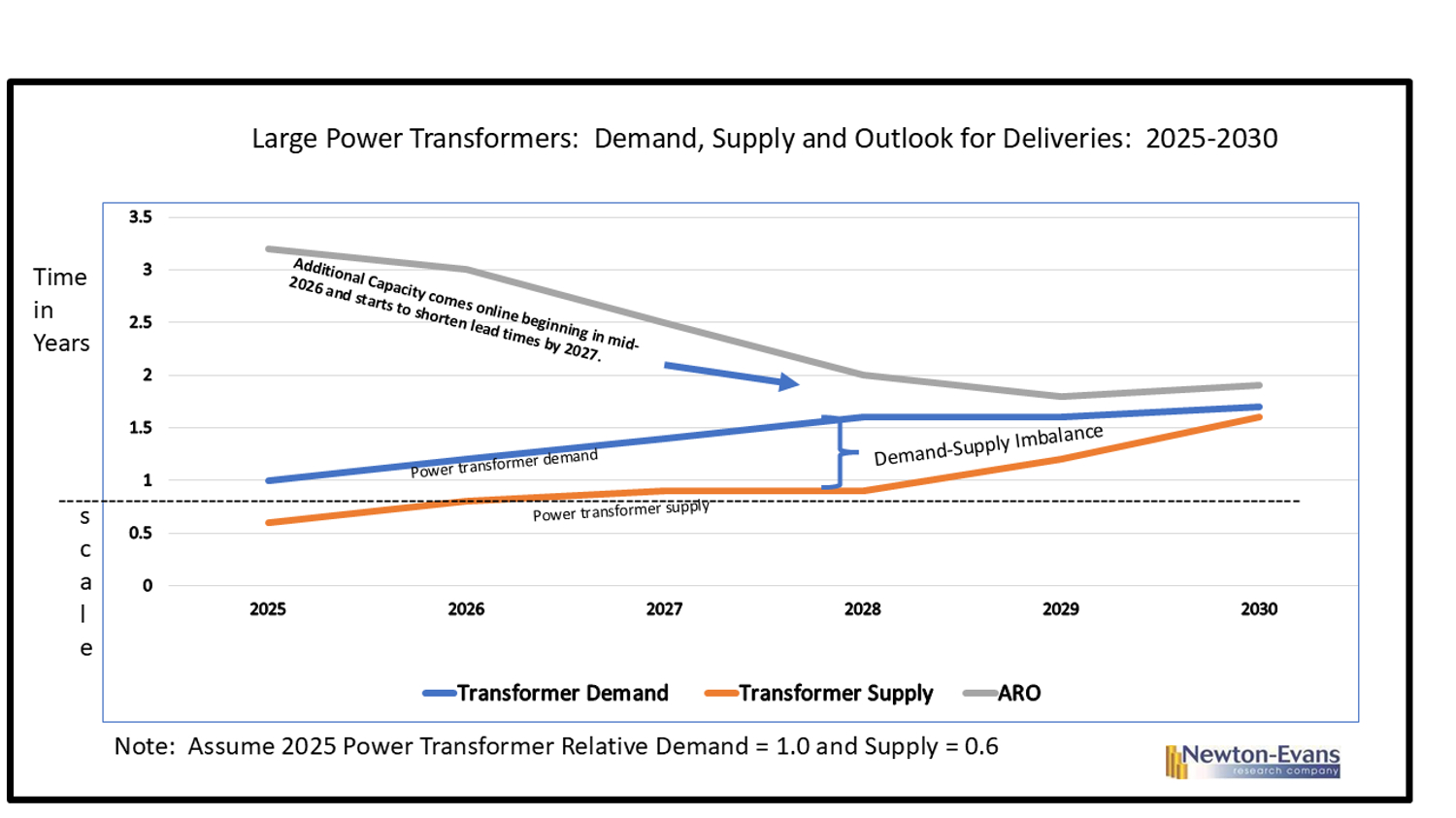
The binding variable has shifted from chip and memory availability to site enablement: connection, energization, cooling, and operation at scale. The same four tests that exposed memory scarcity: backlog versus revenue, margin expansion, lead times, multi-year commitments, translate to electrical equipment and thermal systems.
Disclaimer: The information provided herein does not constitute investment advice, financial advice, trading advice, or any other sort of advice, and should not be treated as such. All content set out below is for informational purposes only.