
A Full Boom-Bust Cycle in Three Weeks
In its first three sessions, SPCX surged 67%, touching $225.64 intraday, with no earnings, no ratings, and no change in fundamentals along the way.
However, the stock then quickly fell back to around $150, completing a 67% surge and a roughly 34% give-back in under a month.
For now, only the minority of retail investors who received $135 IPO allocations through Robinhood, Fidelity, or SoFi still hold about a 10% gain. Ordinary investors who rushed in on day one are flat at best, and anyone who chased the peak is down over 30%.
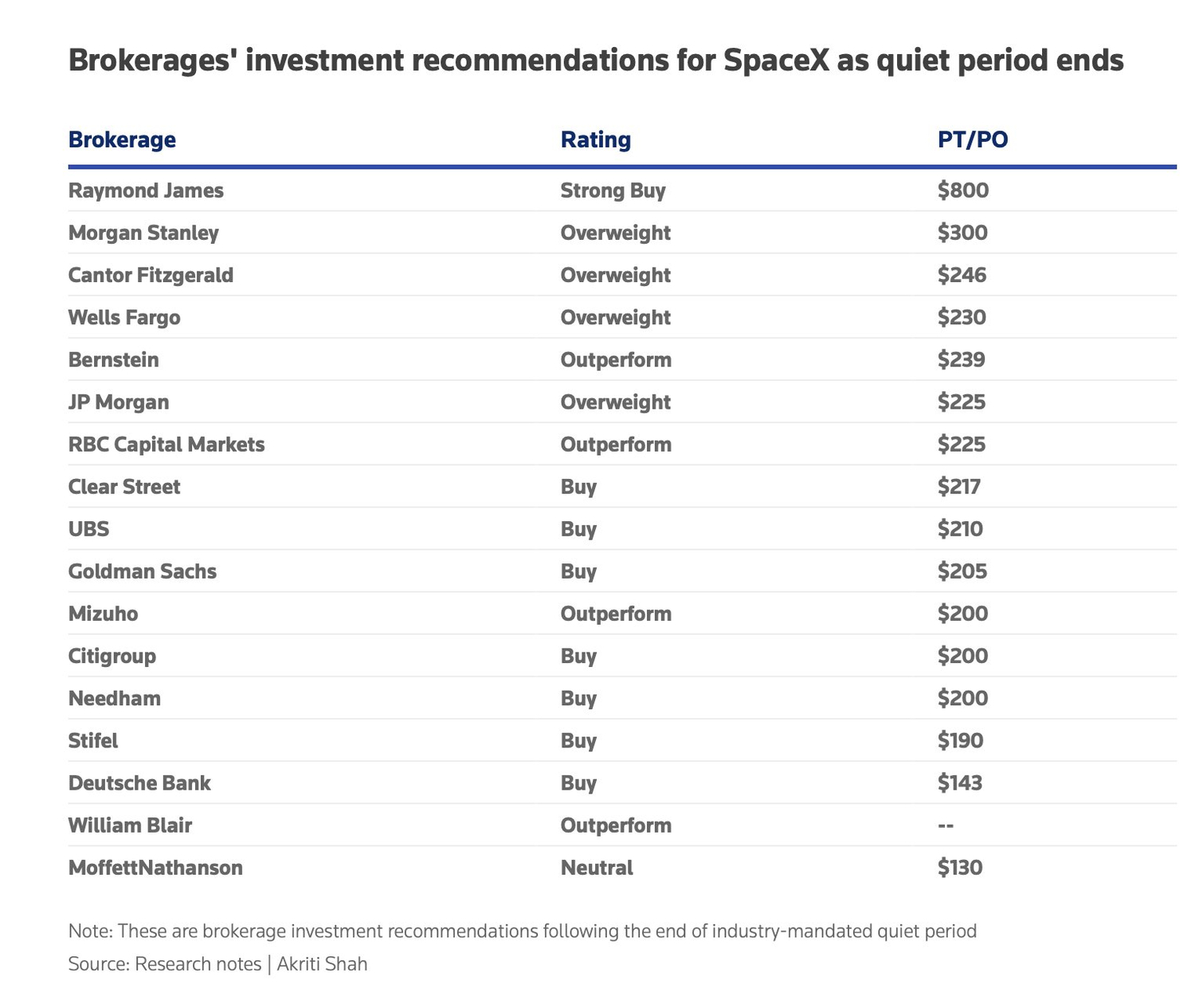
On July 7, SpaceX officially joined the Nasdaq-100. The same day, the 25-day quiet period expired and 19 analysts published near-unanimous buy ratings, with a median target of $250 and a high of $800 from Raymond James.
Index inclusion plus a wall-to-wall chorus of buys, and the stock fell nearly 6%.
A 90-Day Index-Inclusion Guardrail, Cut to 15
Under the old rule, a new listing had to go through a 90-day seasoning period, letting buyers and sellers fight it out and the price stabilize, before it qualified for index inclusion.
On the eve of SpaceX's IPO, Nasdaq changed the rule in May 2026: new listings ranking among the top 40 by market cap can enter the Nasdaq-100 after just 15 trading days.
SpaceX became the first beneficiary.
This means money tracking QQQ and other Nasdaq-100 ETFs, including the index funds inside millions of American 401(k)s, was forced to buy a company that lost $4.9 billion in 2025, trades above 115 times trailing sales, and has been public for under a month, without holders' knowledge or consent.
JPMorgan estimates the inclusion triggers about $4.3 billion in passive buying. That sounds bullish, but there are two problems.
- The buying is too small.
With only 4% to 5% of SpaceX's shares publicly floated, and index weights based on float rather than total market cap, SPCX is capped near 1.3%, around 21st in the index. A $4.3 billion forced bid is a drop in the bucket against profit-taking and looming unlocks.
- Index inclusion is a classic sell-the-news event.
Index-fund buying is a one-time mechanical act that stops once complete, and early institutional holders can use that price-insensitive bid to distribute shares.
- Palantir (PLTR): added December 2024, fell about 23% in the following weeks.
- Strategy (MSTR): peaked November 2024, one month before inclusion, then entered a deep slide.
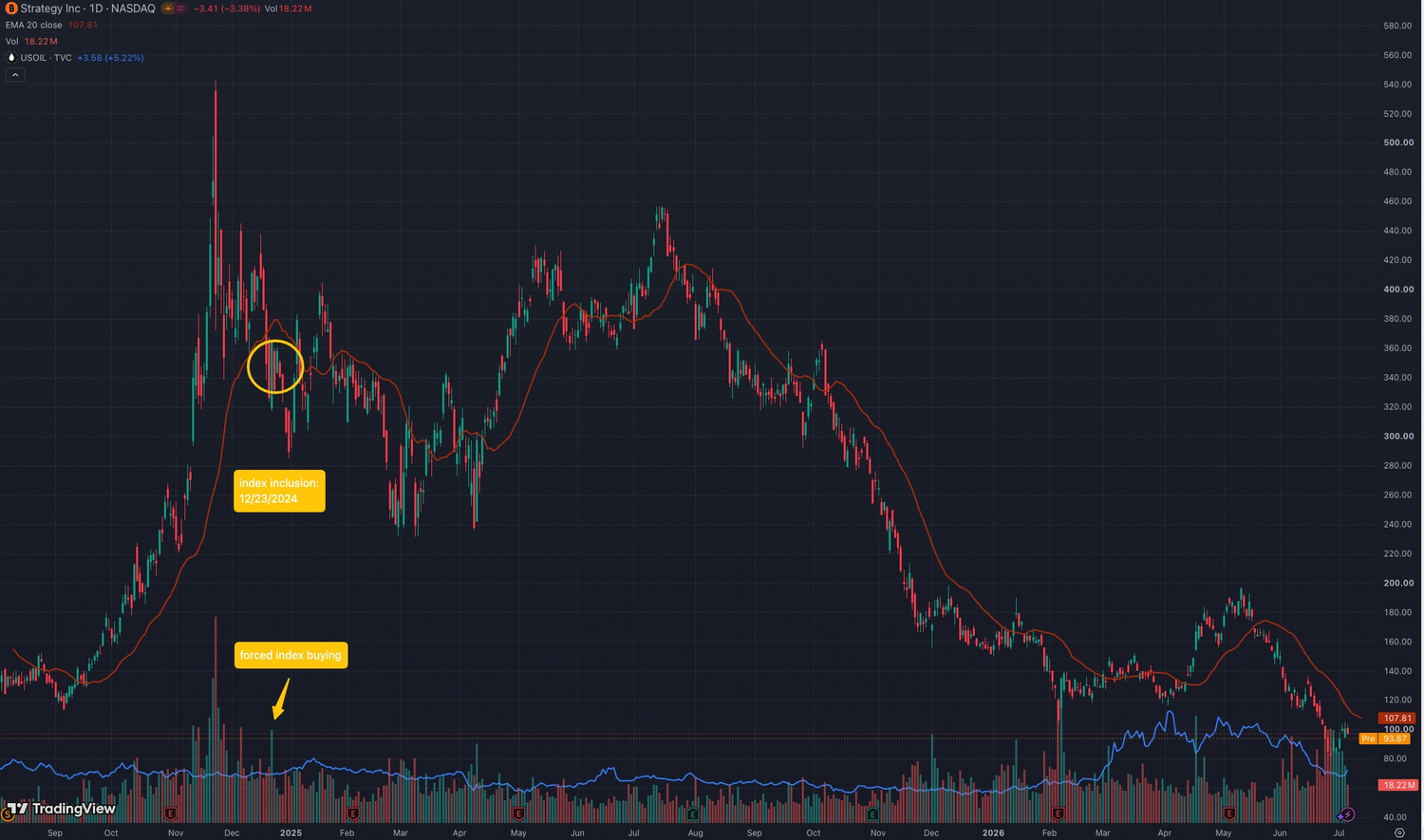
So the July 7 drop was no surprise: the day passive money must buy is the best window for smart money to sell. The cost of the rule change is that risk was quietly shifted onto ordinary people who never chose to own this stock.
IPO History: 55% Average Max Drawdown in Year One
Across 30 well-known tech IPOs, including Facebook, Twitter, Uber, Airbnb, Roblox, and Zoom, only 43% traded above their first-day open a year later.
Worse still, every one broke below its offer price within the first year, with max drawdowns typically over 50%, many reaching 70% to 90%. The average is 55%.
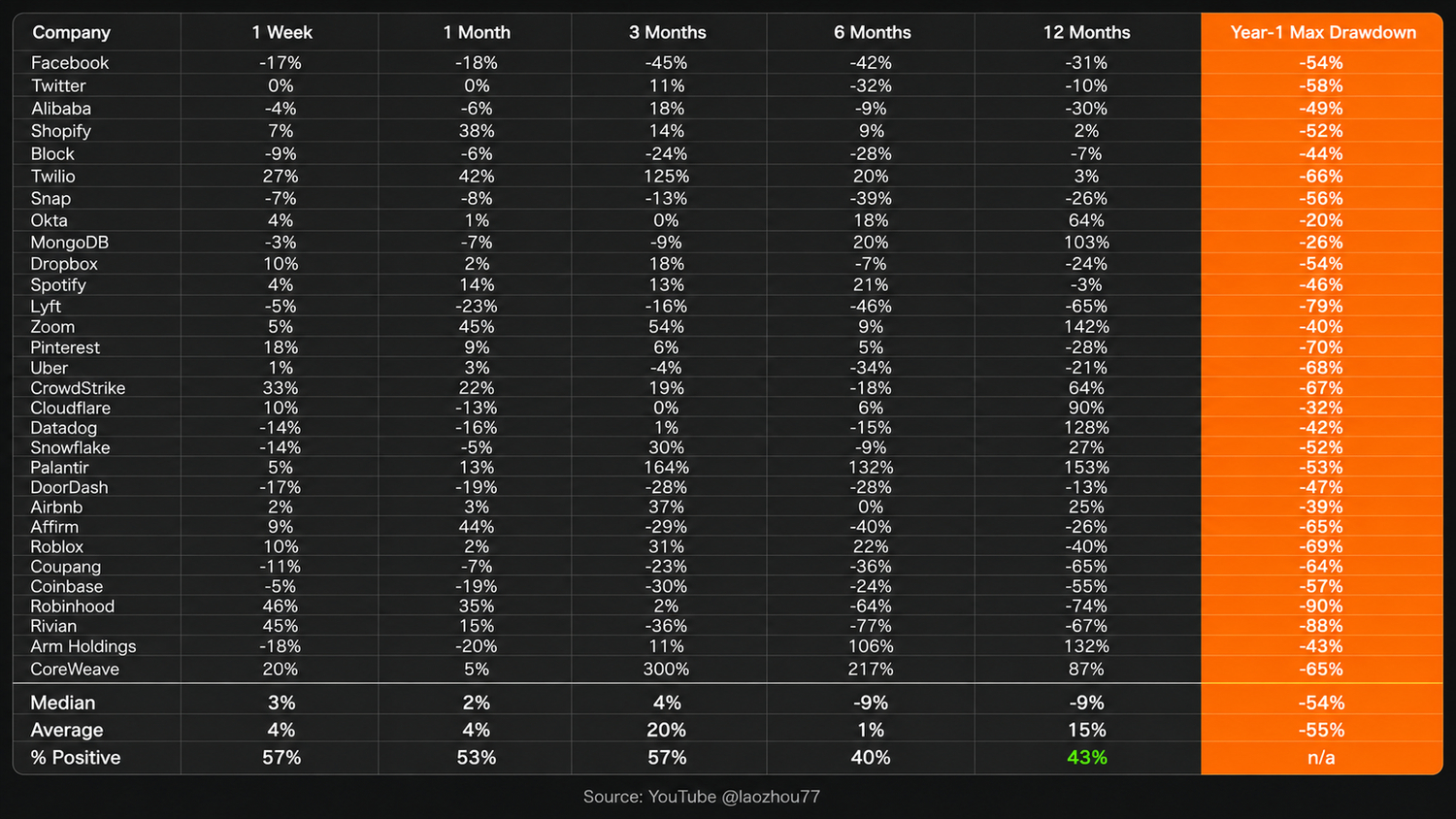
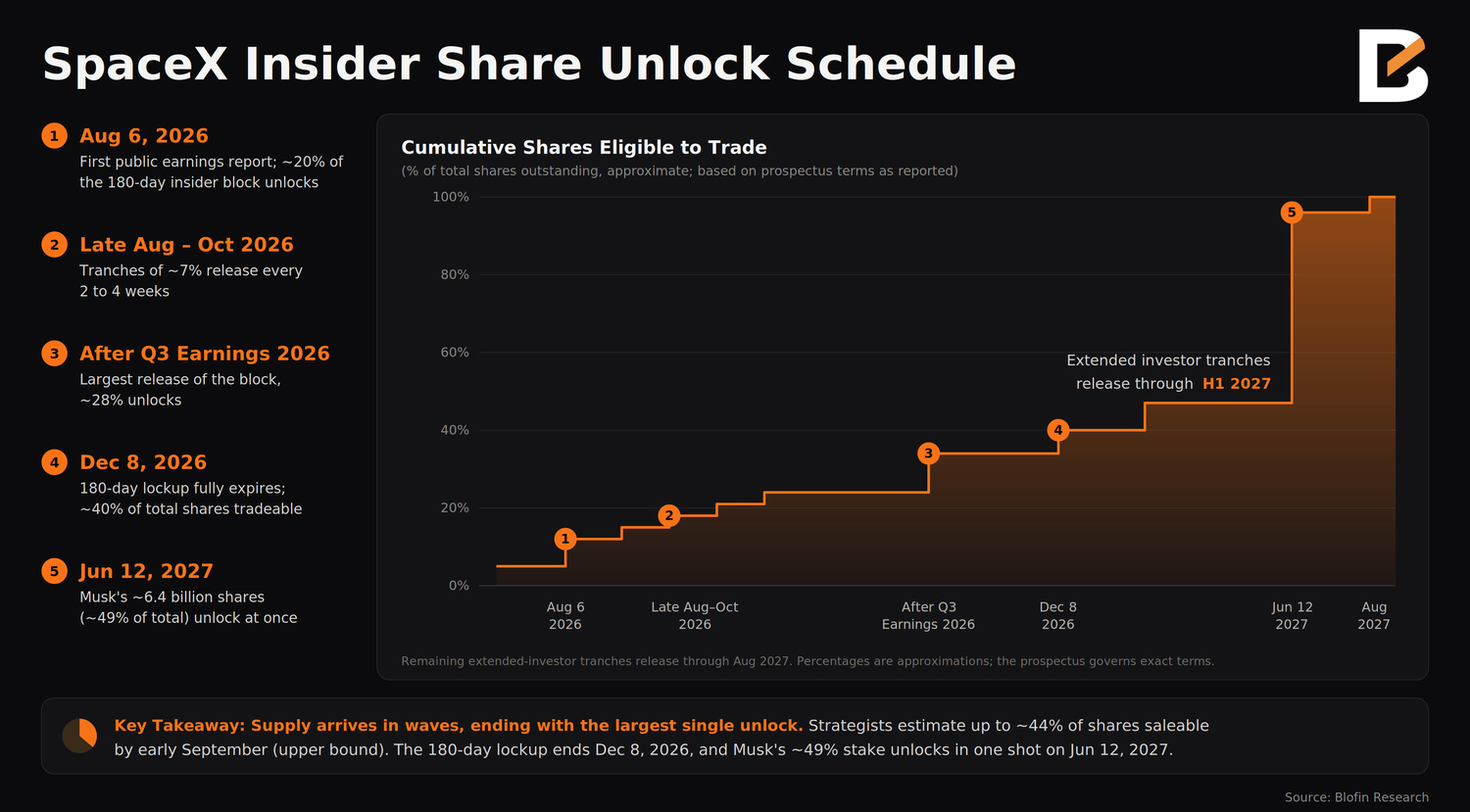
For SpaceX, the test is only beginning. Its unlock calendar is a fully telegraphed supply pipeline:
- Aug 6: first public earnings report; roughly 20% of insider shares unlock the same day
- Late Aug to Oct: tranches of about 7% release every 2 to 4 weeks
- After Q3 earnings: the largest single release, about 28%
- Dec 8: the 180-day lockup fully expires
- Jun 12, 2027: Musk's roughly 6.4 billion shares unlock at once
Strategists estimate that by early September, up to 44% of insider shares could be eligible for sale, expanding today's float roughly ninefold.
The early surge was a scarcity price; the shape of the supply curve is already written in the prospectus.
Great Company ≠ Good Investment
SpaceX may become one of the greatest companies in history, but that does not make it worth buying at any price.
"Rush in at the IPO and you cannot lose" conflates three separate things:
A great company does not mean the valuation is reasonable, and a valuation that eventually becomes reasonable does not mean buying at the most frenzied point of the debut was a good deal.
True price discovery happens when the market returns to fundamentals.
What supports the two-trillion-dollar valuation today is less fundamentals than faith in Musk's vision. Even Wall Street disagrees with itself: same-day targets span $131 to $800, a fivefold gap.
Good investing is not grabbing the hottest stock; it is paying the right price for an asset you truly understand.
Disclaimer: The information provided herein does not constitute investment advice, financial advice, trading advice, or any other sort of advice, and should not be treated as such. All content set out above is for informational purposes only.