
"What's Your Plan?" "Airdrop."
This proposal stems from the Trump administration's tariff policy framework. The president stated, "Every American (excluding high earners) will receive at least $2,000 in dividends." This idea is not entirely new; Trump mentioned a similar concept in July of this year, and Republican Senator Josh Hawley has advanced the "2025 American Worker Tax Rebate Act," which remains under review in the Senate Finance Committee. Treasury Secretary Scott Bessent noted that this dividend could be implemented through tax relief, such as exemptions for tips, overtime pay, and Social Security taxes, or direct payments to households earning less than $100,000 annually. As of 2025, tariff revenues stand at approximately $195 billion to $309 billion, a significant increase from the previous year, but far below Trump's claimed "trillions."
The timing of the launch is noteworthy: the US is recovering from the shutdown crisis, facing concerns about inflation, and the Supreme Court is scrutinising the legality of tariffs. Data from US Customs and Border Protection shows that tariffs levied under the International Emergency Economic Powers Act since Trump's inauguration total about $89 billion. If the court rules them invalid, businesses may receive refunds, which could affect fund availability. This highlights uncertainties in policy execution, and investors should closely monitor its potential effects on market stability.
On the positive side, the plan could provide timely financial support for middle- and low-income groups, particularly during periods of rising prices and heightened economic uncertainty. Trump emphasises that tariff policies have driven growth in manufacturing investments, while rebate cheques could stimulate consumer demand and boost economic growth. It resembles stimulus payments during the COVID-19 pandemic, which helped many families sustain themselves.
Additionally, using tariff revenues to repay the $37 trillion national debt partially demonstrates an intent for fiscal management. White House officials state that this measure aims to "return tariff funds to the people" and may avoid directly increasing the deficit through tax relief. For middle- and low-income households, the additional $2,000, along with accompanying measures (such as car loan interest deductions), could help alleviate cost-of-living pressures. For investors, this might signal short-term consumer recovery, potentially benefiting certain consumption-related sectors.
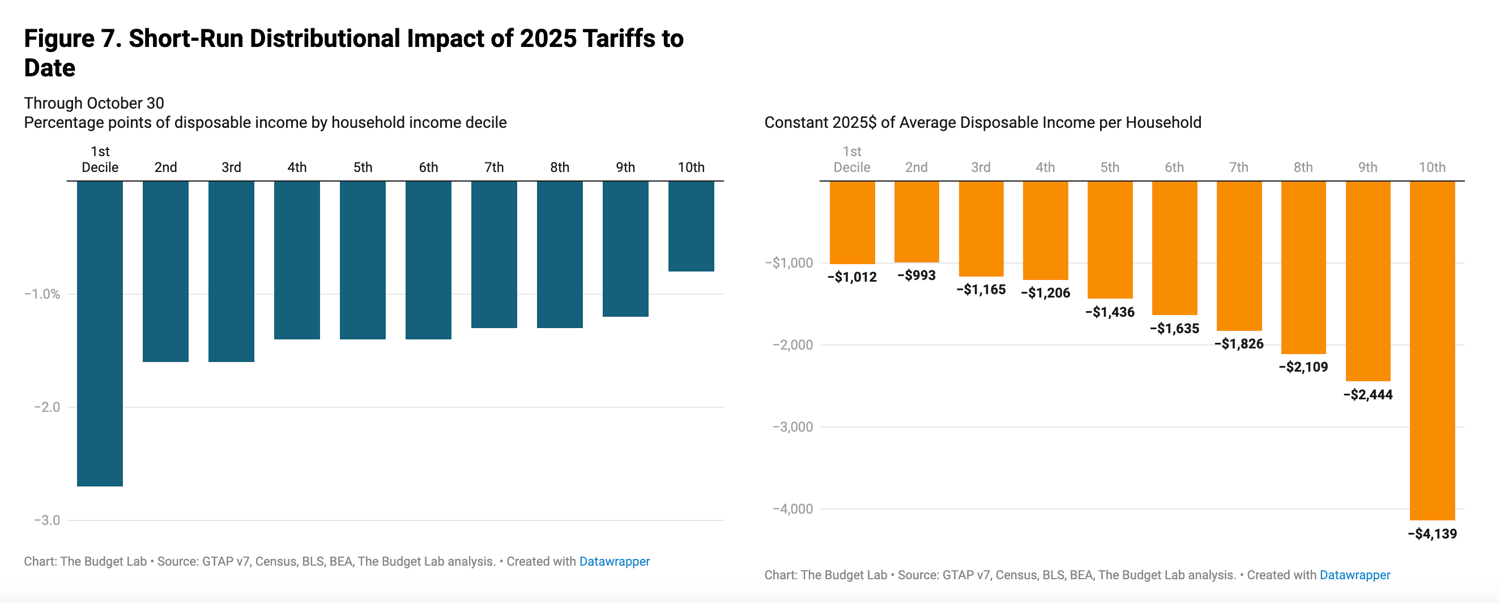
However, the plan faces several challenges. First, the scale of funding sources may be insufficient to support its coverage. If distributed to about 150 million adults earning under $100,000 annually, the cost would reach $300 billion; including children, it could rise to $600 billion, while current net tariff revenues (after tax offsets) are only about $90 billion. Experts note that tariffs are essentially import taxes ultimately borne by consumers, leading to an average additional expenditure of $1,600 to $2,600 per household, which may offset the benefits of rebates. Second, the plan requires Congressional approval, but the recently passed Republican tax bill does not include such rebates, and partisan divisions may delay proceedings.
Source: budgetlab.yale.edu
More importantly, there is a potential risk of inflation. The plan resembles pandemic stimulus, potentially injecting funds on the demand side without corresponding supply-side improvements, which could lead to price pressures. Current inflation rates exceed the Federal Reserve's 2% target, partly due to tariffs that have elevated prices (such as for medicines, steel, and cars). Yale University's Budget Lab estimates that 2025 tariffs will result in an additional $1,800 expenditure per household, further intensifying economic strain. Additionally, if the Supreme Court rules tariffs invalid, revenues would need to be refunded to importers, rendering the plan unfeasible. Investors must remain vigilant about these factors that could potentially trigger market volatility.
Inflation Storm: Potential Impact Assessment
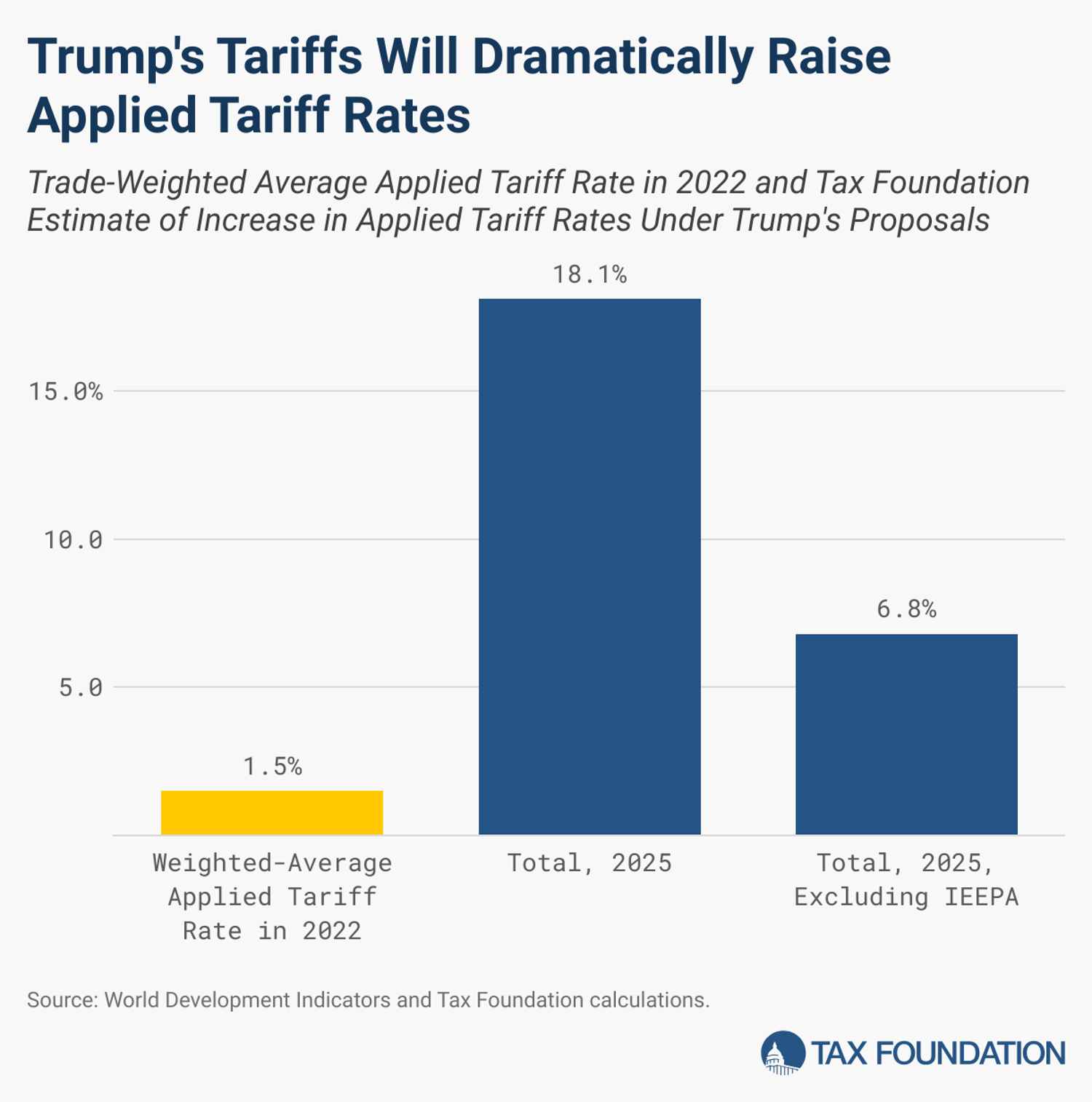
Trump's tariff policies, including additional levies on countries such as Canada, Mexico, and China, have been assessed by numerous economists as significantly increasing inflation pressures. The Tax Foundation's model indicates that 2025 tariffs will increase the average tariff rate to 18.2%, equivalent to a $1,200 tax burden per household, resulting in higher import prices that are transmitted to retail and indirectly amplify inflation.
Moreover, the Yale Budget Lab further indicates that all 2025 tariffs will raise price levels by 2.3% in the short term, equivalent to a $3,800 loss per household consumer (based on 2024 dollar values). The St. Louis Fed observes that during June to August 2025, tariffs accounted for about 0.5 percentage points of annualised PCE inflation. The Wharton School's Penn Budget Model, while not directly quantifying inflation, implies persistent price pressures and economic contraction through projections of consumption declining by 3% to 3.5% (due to higher import prices).
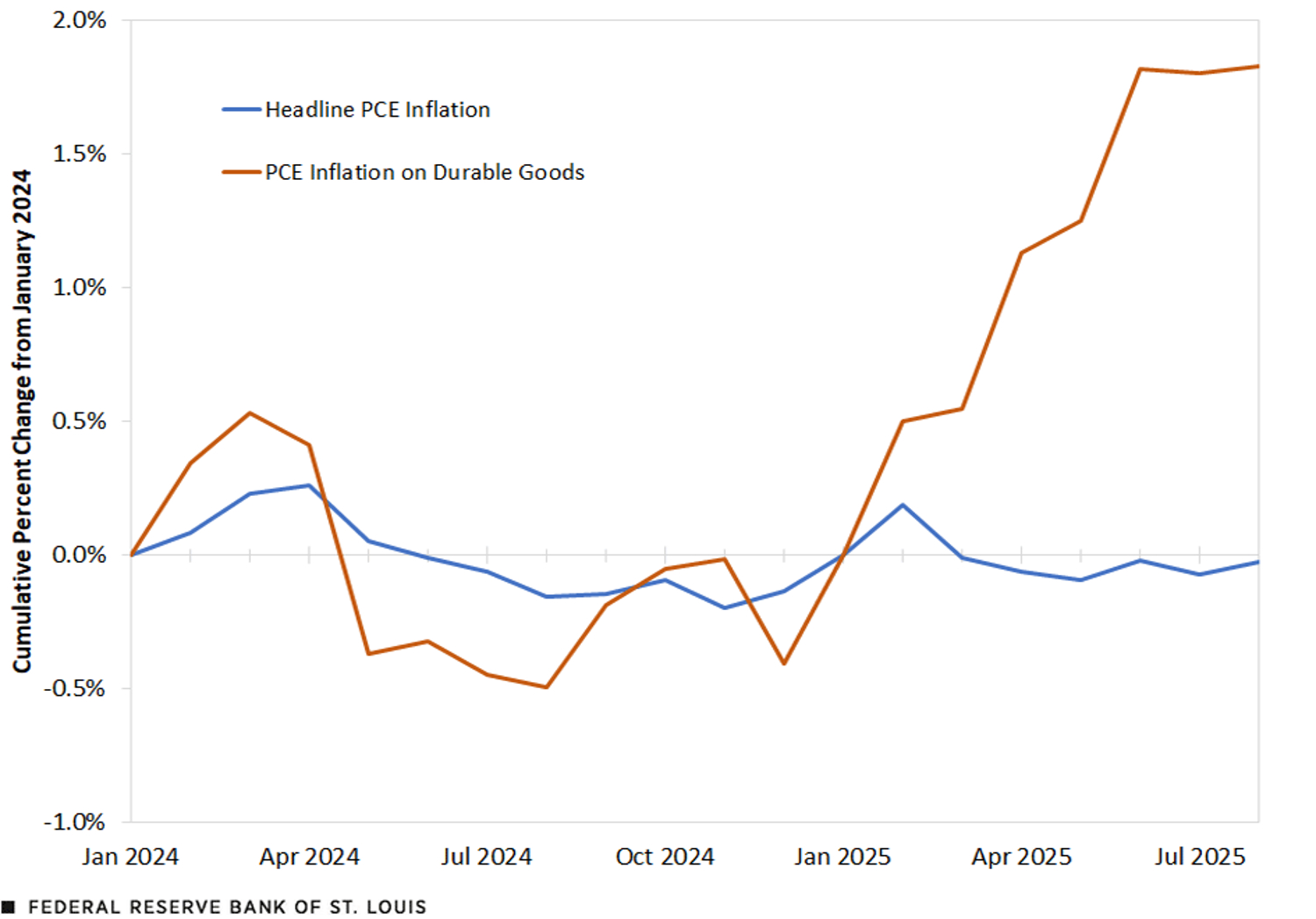
Cumulative Price Change Relative to Trend, January 2024-August 2025. Source: St.Louis Fed

Source: St.Louis Fed
Overall, these assessments suggest that, combined with a rebate cheque demand stimulus, inflation could intensify by 0.5 to 2.5 percentage points in the short term, depending on the scale of tariff implementation and retaliatory measures. For investors, this means evaluating the potential impact of inflation on asset allocation.
As expected, authoritative experts generally adopt a cautious stance. The Tax Foundation's Erica York points out that the plan will increase national debt and may push inflation rates up by 1 to 3 percentage points, recommending direct tariff cancellations for more efficient public benefits. The Urban Institute-Brookings Tax Policy Centre's Joseph Rosenberg emphasises that direct cheques require Congressional legislation, and Congress has previously rejected similar proposals. Columbia Business School Professor Brett House believes the plan is "unlikely to become policy soon" due to a lack of official planning and Congressional support. University of Chicago Professor Tomas Philipson calls its mathematical logic "strange," as rebate amounts may exceed actual collections. The Committee for a Responsible Federal Budget also estimates costs up to $600 billion.
Indeed, in the short term, extra fund injections may boost consumption, but if inflation intensifies, it will erode real purchasing power, particularly for middle- and low-income groups. In the long term, relying on tariffs as a revenue source may distort trade patterns, provoke international retaliation, and impact global supply chain stability. From a market perspective, investors may need to focus on defensive assets, such as inflation-linked bonds or commodities, to address uncertainties. Still, overall strategies should be based on comprehensive data analysis rather than short-term stimuli. Ultimately, the plan's implementation depends on Congressional action and Supreme Court rulings; for investors, maintaining vigilance and diversifying allocations is key.
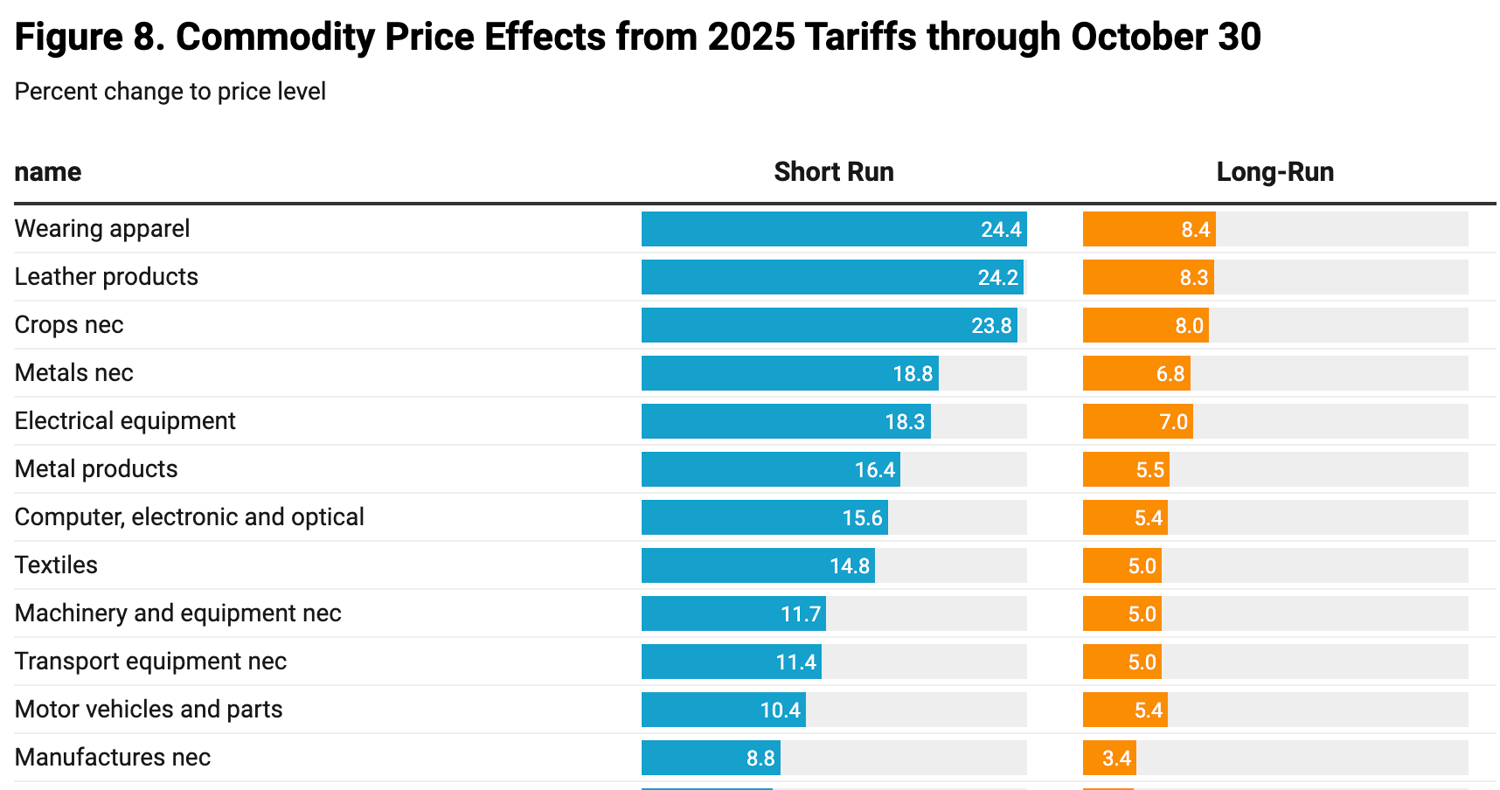
The "airdrop" brought cash to the people. However, given the dramatic price increases caused by tariffs in just 10 months, more cash is likely to drive up the prices of necessities further, and this effect may be long-term. Source: budgetlab.yale.edu
Trump's $2,000 tariff dividend plan, while intending to boost public confidence through direct relief, faces significant questions about feasibility. Positive aspects include potential economic stimulus and debt repayment; however, funding shortages, inflation risks, and legislative hurdles present substantial challenges. In the current economic environment, this proposal embodies a populist style but requires a more pragmatic fiscal framework for support.
Economic Calendar of This Week
Tuesday 07:00
- UK Unemployment Rate
Thursday 07:00
- UK GDP Growth Rate QoQ Prel
- UK GDP Growth Rate YoY Prel
- UK GDP MoM
Thursday 13:30
- US Inflation Rate YoY (TBA)
- US Inflation Rate MoM (TBA)
- US Core Inflation Rate MoM (TBA)
- US Core Inflation Rate YoY (TBA)
Friday 13:30
- US PPI MoM (TBA)
- US Retail Sales MoM (TBA)
Disclaimer: The information provided herein does not constitute investment advice, financial advice, trading advice, or any other sort of advice, and should not be treated as such. All content set out below is for informational purposes only.