
Rate Cuts Incoming, but More Pessimism
Unlike the optimism of stock market investors, the recent performance of the crypto market has not significantly improved in response to expectations of rate cuts. The prices of BTC and ETH remain range-bound, and ETH's implied forward yield has yet to return above 6%, meaning its risk premium remains limited for investors.
The only significant change has been in the performance of altcoins: their market share has been gradually recovering since July, reaching a nearly two-month high this week. This isn't surprising: altcoins, like small- and mid-cap stocks, are generally more sensitive to interest rate and liquidity expectations. Rate cuts have brought "cheaper" liquidity, and with the Federal Reserve weakening and future rate cuts likely to be dictated by Trump, the prospect of abundant liquidity has begun to fuel investor speculation.
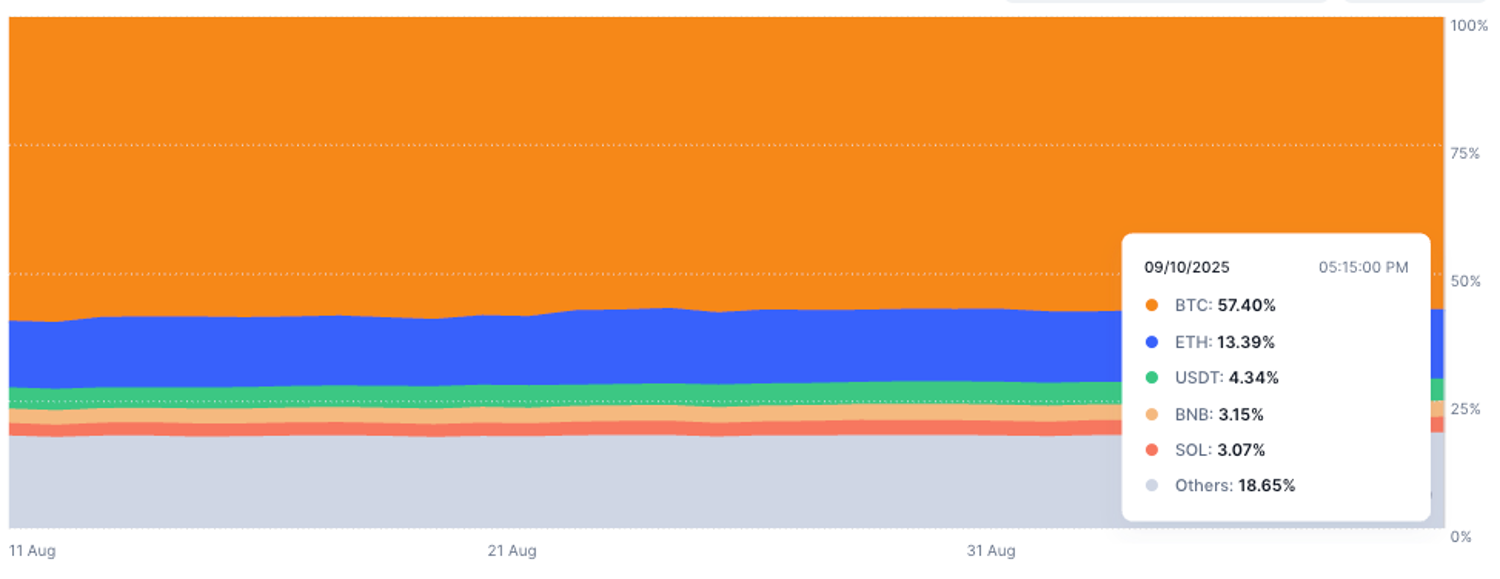
Changes in Bitcoin & Altcoins' dominance over the last 30 days. Source: CoinMarketCap
But traders in the derivatives market aren't solely focused on the present. Further potential interest rate cuts haven't impacted traders' cautious sentiment regarding the performance of BTC and ETH; the bearish sentiment implied in quarterly options has become more pronounced in the past week.
Unlike weekly and 0DTE options, quarterly options trade more on investors' expectations of the underlying asset's outlook rather than its price (what traders often refer to as "vega-dominant" and "gamma-dominant"). Therefore, rising bearish sentiment in the far-month options typically indicates that concerns about long-term risks are being priced in, leading to increased demand for far-month insurance.
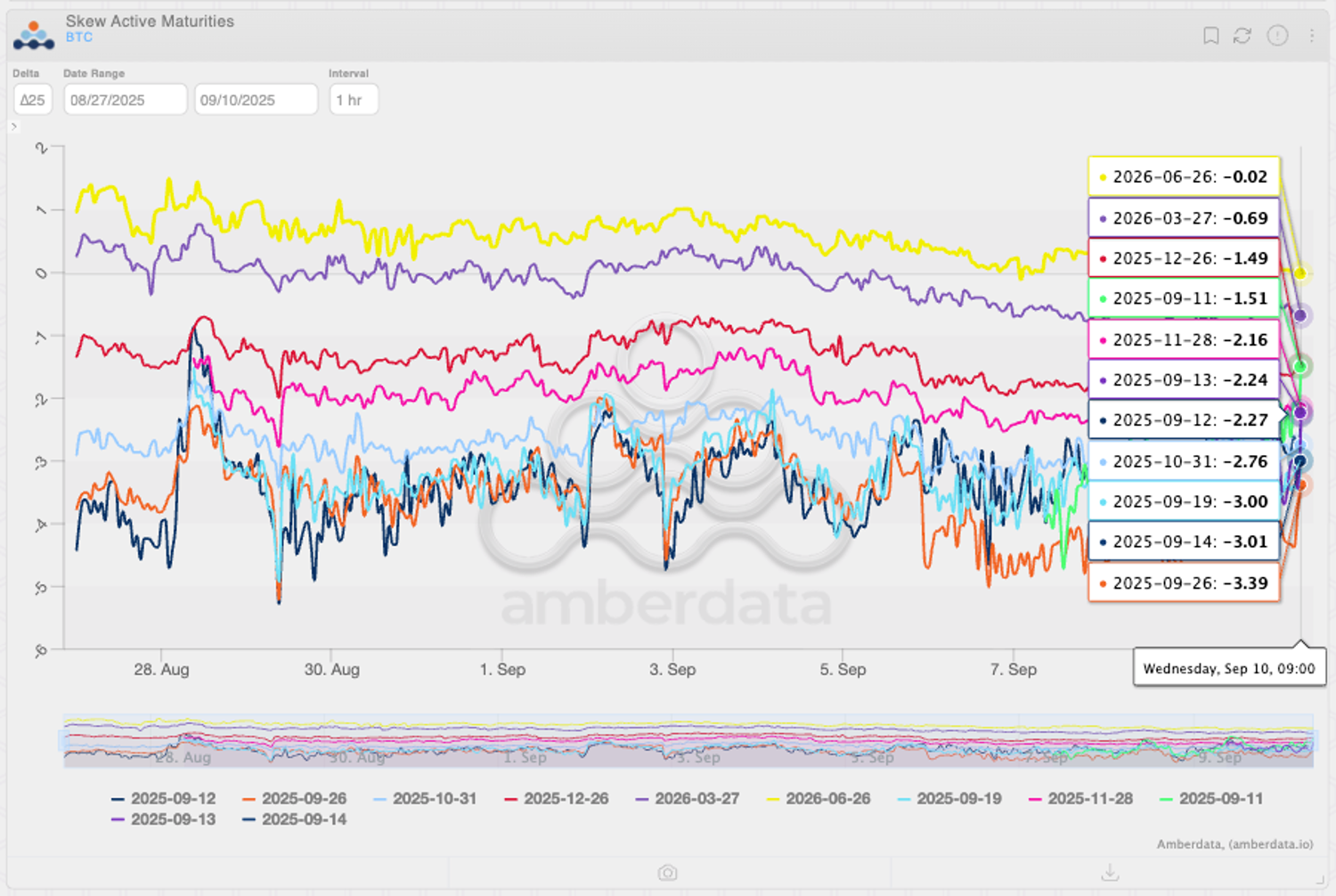
Source: Amberdata Derivatives
Compared to previous historical data, the current demand for far-month put options is genuinely astonishing. While BTC and ETH prices haven't yet shown a significant downward trend, the skewness of BTC quarterly options is already comparable to levels seen in April 2022. Only in May and November 2022 did pessimism exceed the current level, which is not a positive sign.
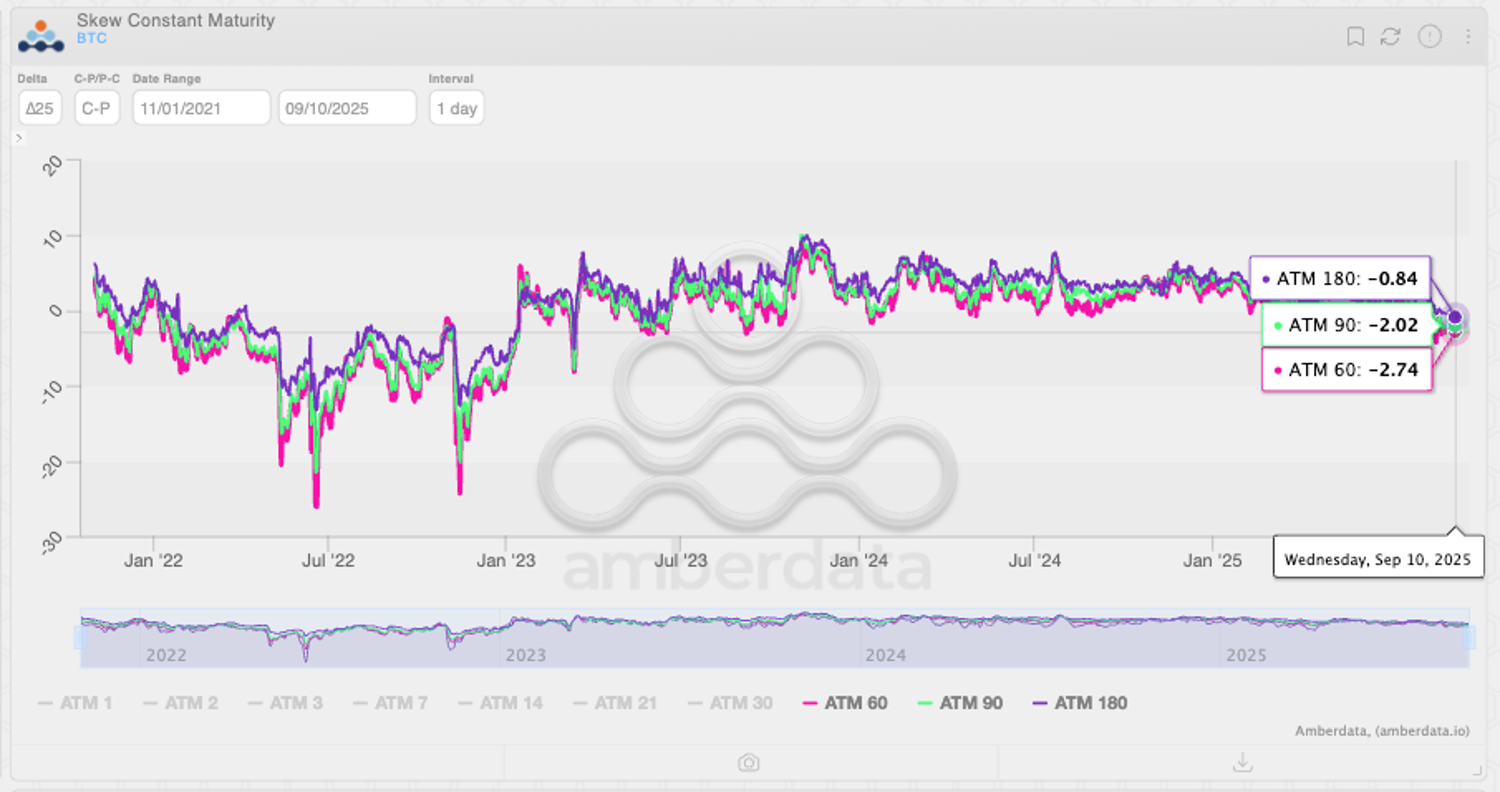
Source: Amberdata Derivatives
ETH's situation is slightly better. As an asset strongly tied to US stocks, ETH could significantly benefit from the expectation of interest rate cuts. However, rising doubts regarding treasury strategies and exchange regulatory intervention in these strategies have, to some extent, impacted expectations of ETH's future liquidity. As a result, although the bullish sentiment in far months driven by the expectation of a rate cut has not completely dissipated, investors remain significantly bearish on ETH's performance for the remainder of 2025.
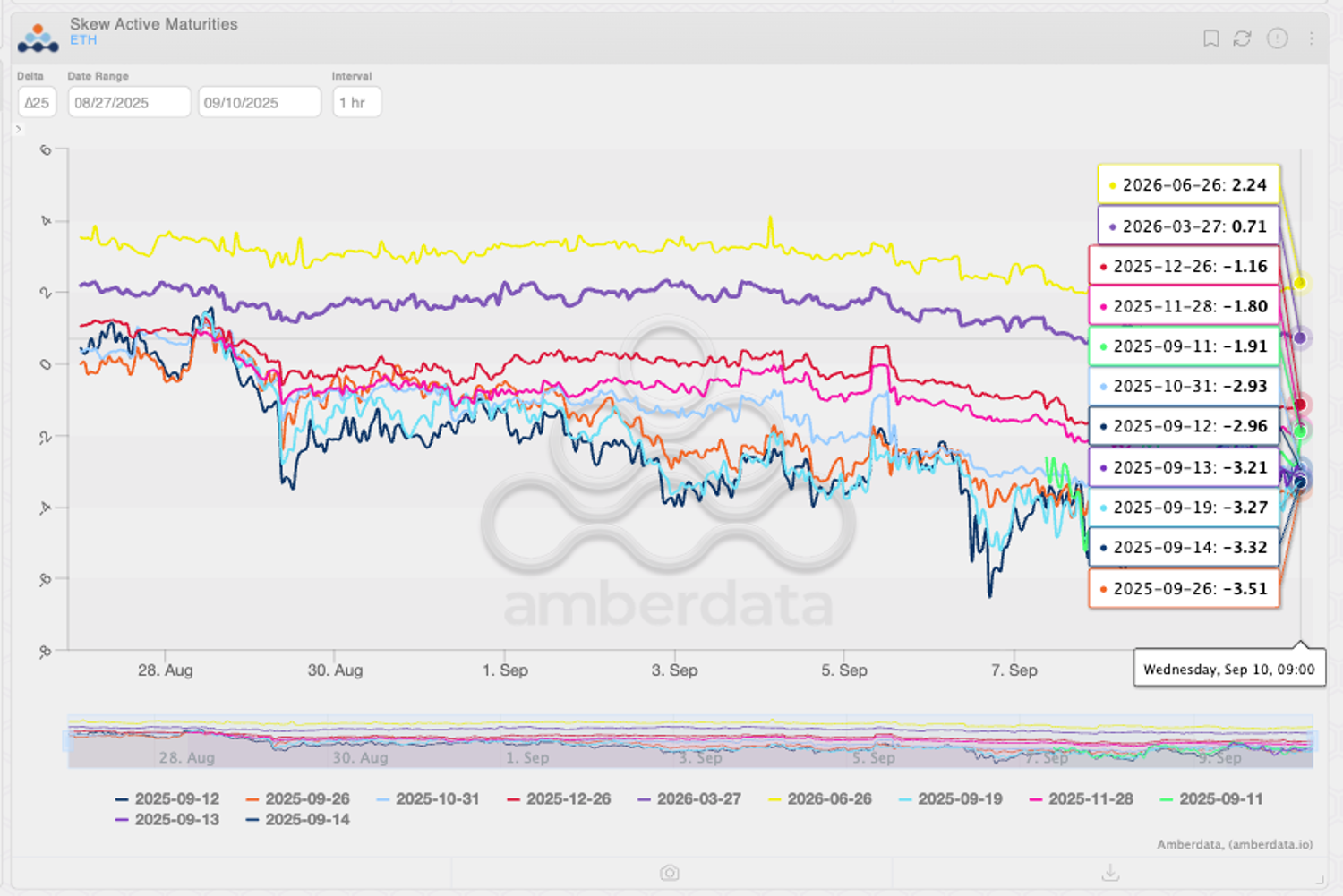
Source: Amberdata Derivatives
Is the Easing Cycle Coming to an End?
Options traders' concerns about the future are justified. Similar to gold, Bitcoin's liquidity comes largely from offshore markets, meaning its "stored" liquidity depends not only on the Federal Reserve, but also on the monetary policies and open market operations of the European Central Bank and the Bank of Japan, which also significantly influence Bitcoin's performance.
The European Central Bank has semi-officially acknowledged a pause in its interest rate cutting cycle, and money markets believe there's only a one-in-three chance of one more rate cut before December. The Bank of Japan, driven by economic and corporate profit growth, coupled with rising wage pressures, is considering a further rate hike in October. Therefore, the size of offshore liquidity depends largely on whether the Fed's easing policies can outweigh potential tightening measures from the ECB and Bank of Japan. Given the transmission time of monetary policy, it's unlikely we will see a significant expansion in offshore liquidity within three to six months of a Fed rate cut, which provides ample reason for traders' caution at the macro level.
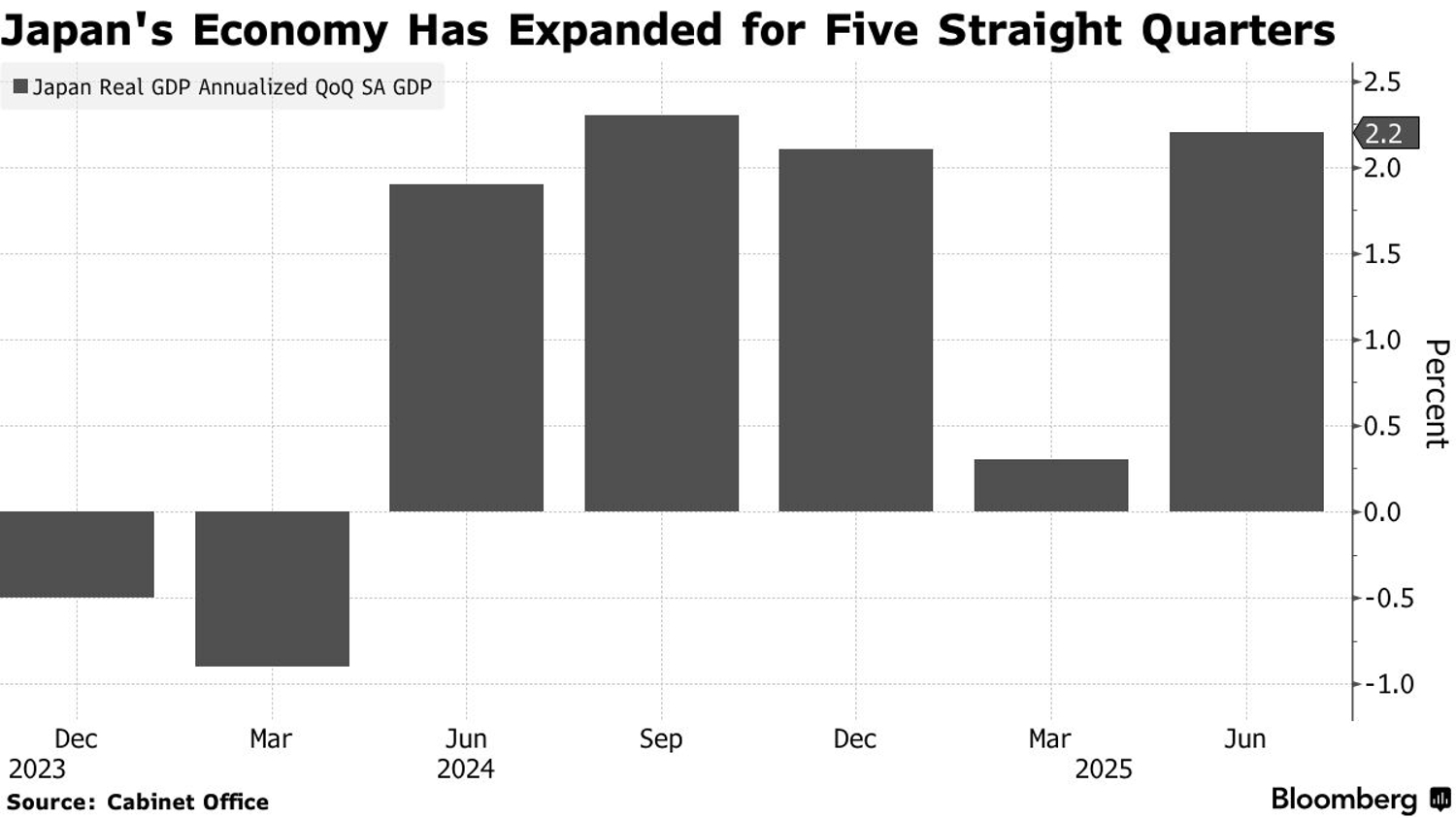
Furthermore, unlike gold, leverage has a relatively greater impact on Bitcoin's price. A Fed rate cut will undoubtedly impact liquidity, for better or worse. Therefore, the liquidation of leverage will likely precede a price rebound and increase, which is why traders tend to be cautious: before leverage is liquidated, price increases lack a sufficiently solid foundation.
Of course, traders also question the sustainability of continuous interest rate cuts over the next year. Even if the upcoming August CPI data meets expectations, the rebound in inflation has been further confirmed, and further interest rate cuts are likely to catalyse inflation and inflation expectations.
Admittedly, the significantly downward revision to the non-farm payroll data has convinced economists that the US economy is on the brink of recession, which strengthens the need for interest rate cuts. Still, rate cuts do not necessarily create more new jobs. Significant evidence suggests that even before Trump's overall tariff and immigration policies took effect, the huge post-pandemic job boom was already giving way to slower growth, even during last year's rate cut cycle.
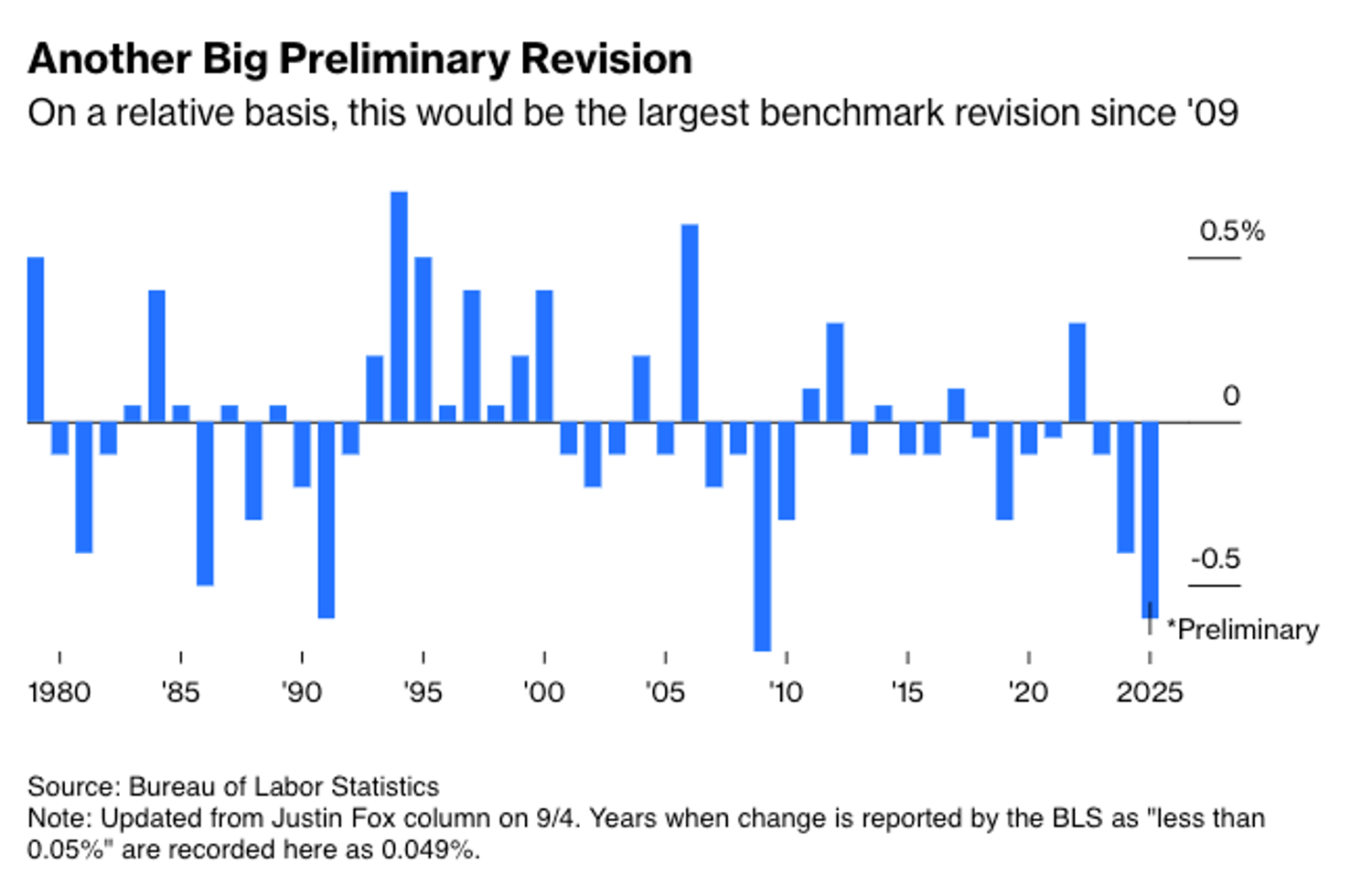
This scenario above paints a more worrying picture: stagflation. The stimulus from rate cuts is likely to be only short-term, and the subsequent lack of economic growth is worrying. Tariffs haven't yet created more jobs, and the ICE raid on Hyundai's US factory has made foreign companies more cautious about infrastructure investment, further negatively impacting the labour market.
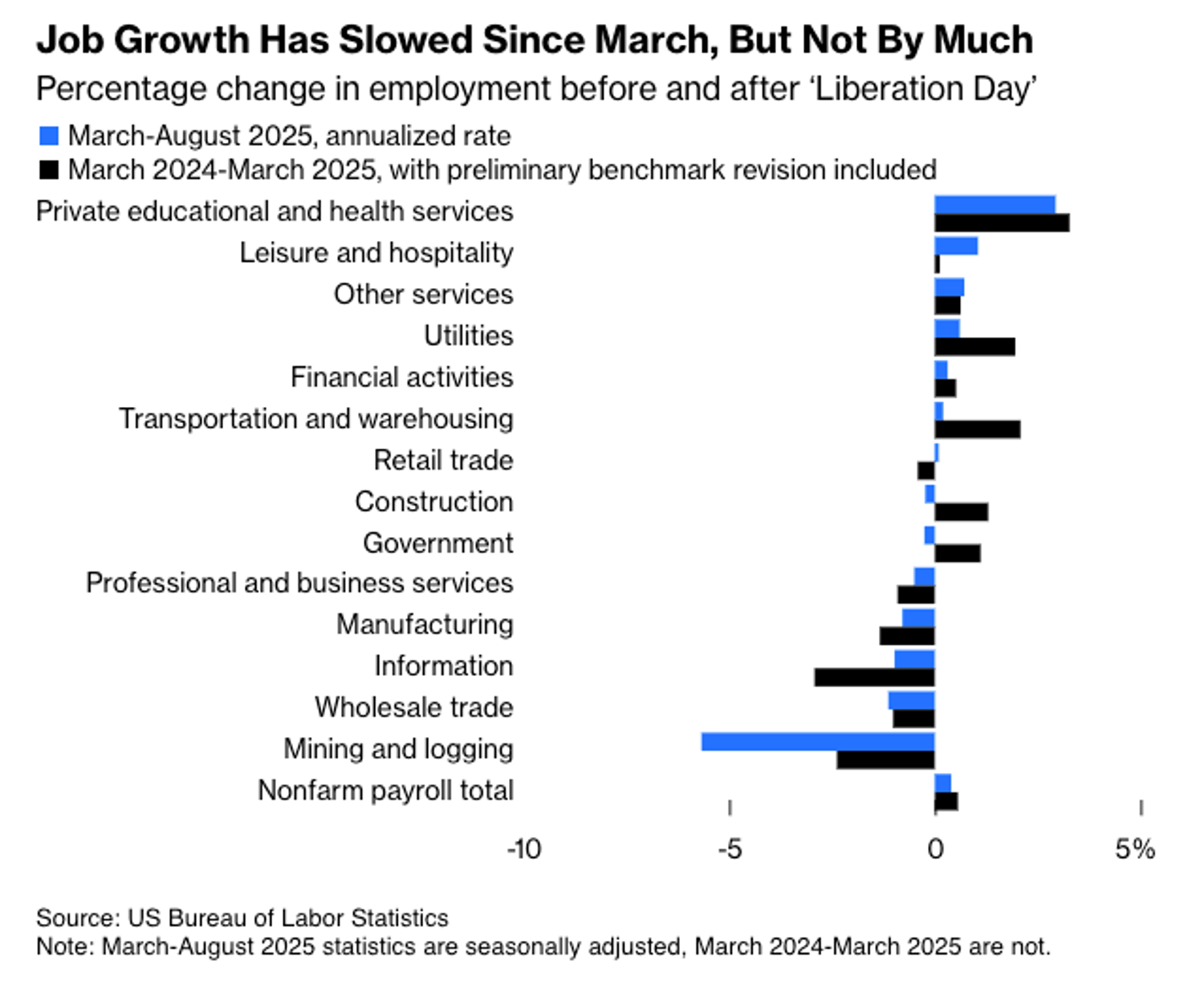
Although it will take time, once stagflation is confirmed, a significant depreciation of dollar-denominated assets is inevitable. Of course, even if the Federal Reserve is already under the control of the Trump administration, a drastic shift in economic policy after the midterm elections to avoid even more catastrophic consequences (TACO again!) is possible. This is the main reason why traders are expressing long-term caution on ETH and altcoins through options. While the liquidity brought by interest rate cuts has certainly boosted speculators' sentiment, the potential consequences should not be ignored.
Economic Calendar of This Week
Tuesday 14:00
- US Non-Farm Payrolls Annual Revision
Wednesday 12:30
- US PPI MoM
Thursday 12:15
- EU Deposit Facility Rate
- EU ECB Interest Rate Decision
Thursday 12:30
- US Inflation Rate YoY
- US Core Inflation Rate MoM
- US Core Inflation Rate YoY
- US Inflation Rate MoM
Thursday 12:45
- EU ECB Press Conference
Friday 06:00
- UK GDP MoM
Friday 12:30
- US Michigan Consumer Sentiment Prel
Disclaimer: The information provided herein does not constitute investment advice, financial advice, trading advice, or any other sort of advice, and should not be treated as such. All content set out below is for informational purposes only.