
Introduction
Plasma is a new high-performance Layer-1 blockchain purpose-built for stablecoins, backed by major crypto industry players. Its long-awaited mainnet beta launches on September 25, 2025, alongside the network’s native token XPL. The project aims to serve as core infrastructure for digital dollar transactions, enabling near-instant, fee-free stablecoin payments with institutional-grade security.
Plasma’s launch is set to debut at an impressive scale, the network will start with over $2 billion in stablecoins deployed across 100+ DeFi partners on day one. This liquidity positions Plasma as one of the world’s top ten blockchains by stablecoin deposits from inception.
The project has also raised $24 million in seed funding (led by Framework Ventures with involvement from Tether’s Paolo Ardoino and others).
Plasma Blockchain (Layer-1)
The Plasma chain is optimized for stablecoin usage, offering several unique features and technical advantages:
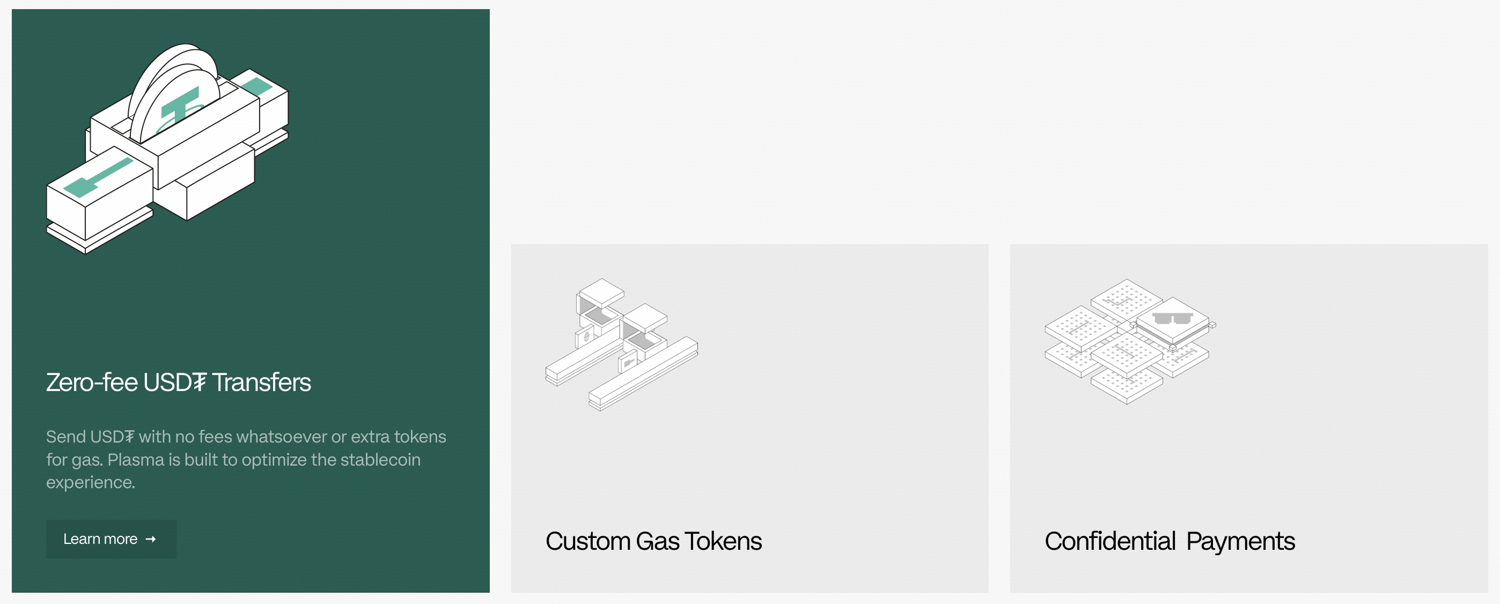
High Throughput & Low Latency: Plasma employs a BFT consensus enabling thousands of transactions per second and sub-second finality. This performance is geared for high-volume stablecoin payments at global scale. The network is also fully EVM-compatible, meaning Ethereum-based smart contracts can be deployed on Plasma with no modifications.
Zero-Fee USDT Transfers: A signature feature is gasless stablecoin transactions, users can send Tether (USDT) on Plasma without paying any fees or needing a native token balance. The protocol uses a built-in paymaster to sponsor gas for USDT transfers, facilitating frictionless remittances and micropayments in digital dollars.
Custom Gas Tokens: For other activities, Plasma allows transaction fees to be paid in whitelisted assets like USDT or even BTC instead of a dedicated gas token. This flexibility simplifies the user experience by letting people cover fees with the same stablecoins they are transacting in.
Confidential Transactions: The roadmap includes support for confidential payments, enabling users to transact privately on Plasma. This will obscure transaction details while remaining compliance-friendly, adding a layer of privacy for sensitive stablecoin transfers (a feature slated to roll out as the network matures).
Native Bitcoin Bridge: Plasma integrates a trust-minimized Bitcoin bridge that will allow BTC to flow into the network’s EVM environment. This pBTC bridge brings the liquidity of the world’s largest digital asset onto Plasma without relying on centralized custodians, expanding the ecosystem beyond USD stablecoins.
Plasma One (Stablecoin Neobank)
In tandem with its blockchain, Plasma is launching Plasma One, a stablecoin-native neobank and card designed to make holding and spending digital dollars seamless. Key features of Plasma One include:
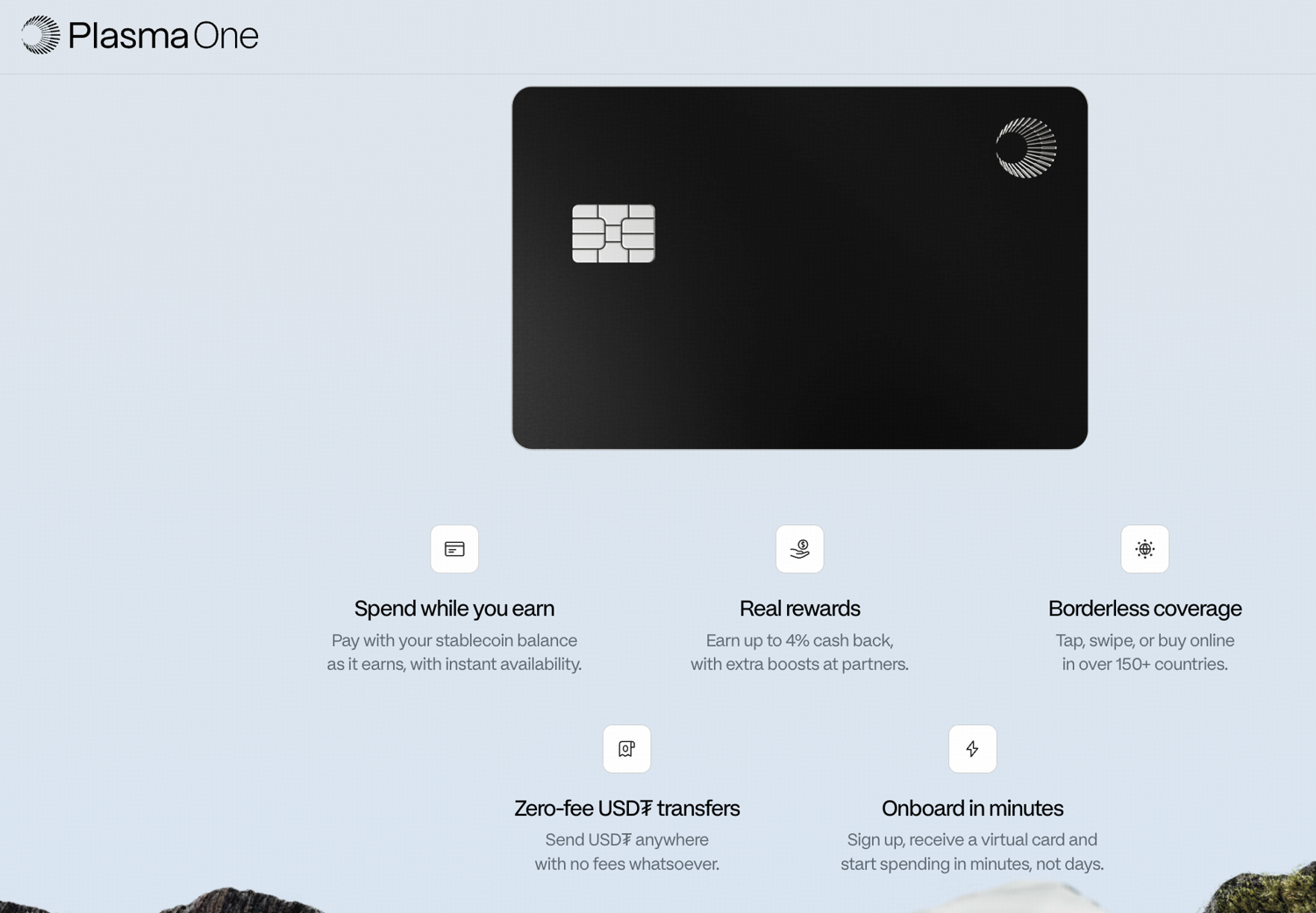
Earn While Spending: Users can pay directly from their stablecoin balance (initially USDT) and earn 10%+ yield on those holdings at the same time. Balances accrue yield with no lockup, leveraging Plasma’s DeFi ecosystem to generate returns.
Real Rewards: The Plasma One card (available in virtual or physical form) offers up to 4% cashback on purchases. This provides tangible rewards for everyday spending, paid out in stablecoins.
Borderless Spending: The card works in 150+ countries at over 150 million merchants worldwide. This broad coverage allows users to spend stablecoins globally wherever major payment cards are accepted, bridging crypto funds to real-world commerce.
Zero-Fee Transfers: Within the Plasma One app, users can instantly send digital dollars to anyone with no transfer fees. This facilitates free person-to-person payments and remittances in stablecoins, leveraging Plasma’s fee-less transaction infrastructure.
Fast Onboarding: Signing up for Plasma One is quick, new users can complete KYC onboarding and receive a virtual USD₮ debit card within minutes. This lowers barriers so people in cash-restricted markets can start saving and transacting in stablecoins without lengthy bank processes.
Together, these core products, the Plasma blockchain and the Plasma One app, are designed to work in tandem. The chain provides the rails for fast, low-cost stablecoin transactions and DeFi yields, while the neobank provides the user-facing interface for everyday financial activities (savings, payments, and card spending in stablecoins). By vertically integrating the infrastructure with an easy consumer app, Plasma aims to deliver a complete stablecoin-based banking experience for users worldwide.
Token Utility
XPL is the native utility token of the Plasma network, playing a role similar to ETH on Ethereum or BTC on Bitcoin.
It secures the proof-of-stake blockchain by incentivizing validators and aligning their interests with network health. Validators stake XPL to participate in consensus and are rewarded in XPL for processing transactions, thus maintaining the chain’s security and performance.
The token also underpins governance and ecosystem growth, XPL holders have a say in protocol upgrades, and the token is used to fuel various network incentives and DeFi programs on Plasma. Notably, ordinary users sending stablecoins don’t need to hold XPL for gas (due to Plasma’s fee sponsorship for USD₮), but XPL remains crucial behind-the-scenes for validator rewards, transaction fees in other assets, and long-term network sustainability.
Token Allocation
Plasma’s XPL token has a fixed initial supply of 10 billion XPL at mainnet launch. The distribution of this supply is designed to balance community ownership with funding for growth and development. The allocation breakdown is as follows:
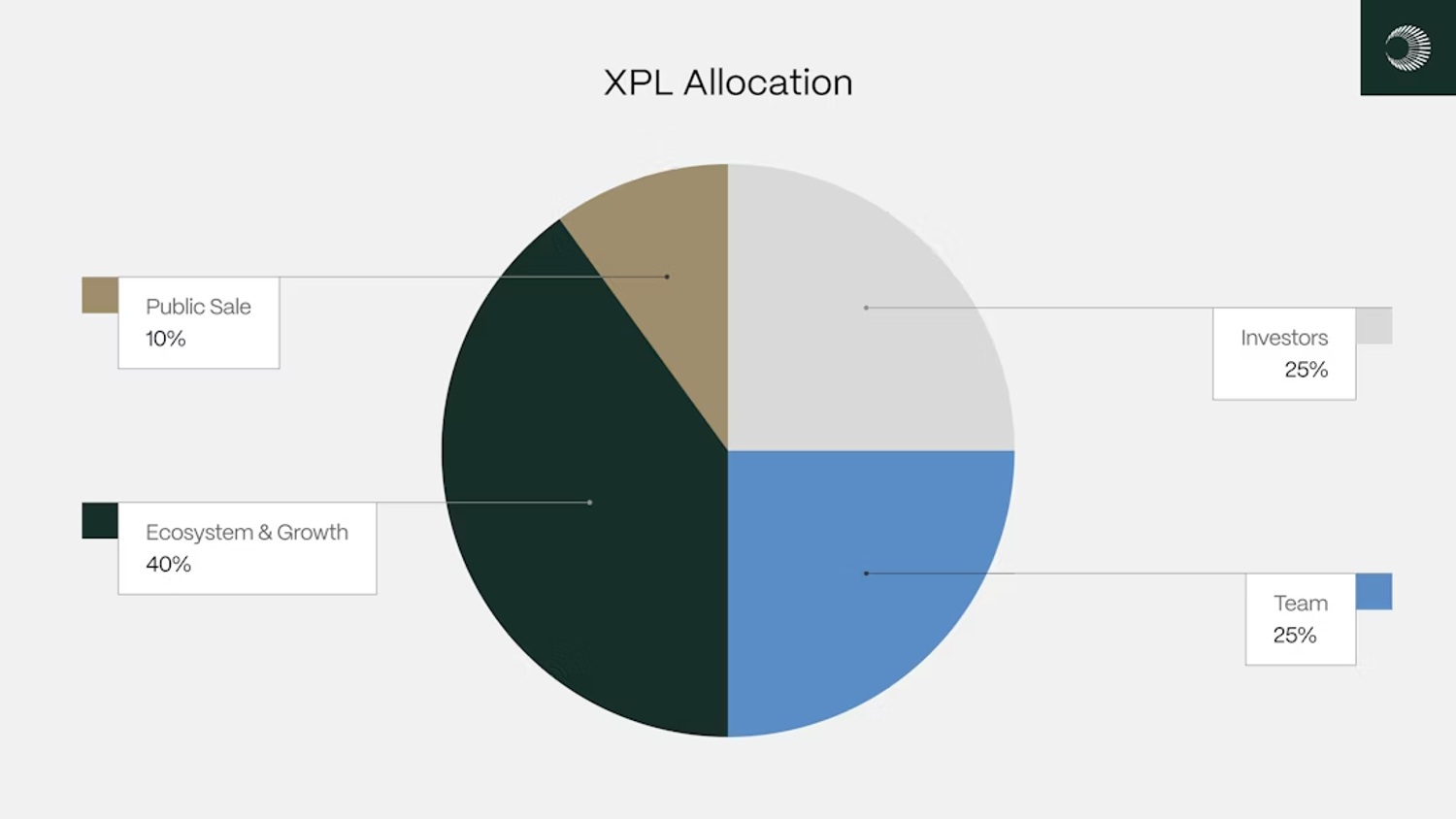
Public Sale – 10%: 1.0 billion XPL was allocated to community members through Plasma’s public sale and deposit campaign. This portion was sold to early adopters (with broad participation via the Echo launch platform) to decentralize ownership.
Ecosystem & Growth – 40%: 4.0 billion XPL is reserved to bootstrap the Plasma ecosystem. These tokens will fund strategic initiatives such as liquidity incentives, partnerships (e.g. with DeFi protocols and fintech firms), exchange integrations, and programs to drive stablecoin adoption on Plasma.
Team – 25%: 2.5 billion XPL is allocated to the Plasma core team and future contributors. This serves to attract and retain talent with long-term incentives as they build out the network and its products.
Investors – 25%: 2.5 billion XPL is set aside for Plasma’s private investors and backers. Notable investors include Bitfinex, Founders Fund, and others who provided seed and Series A funding to the project.
Future Roadmap
2025 – Phased Launch and Adoption
With the mainnet beta going live in late 2025, Plasma’s immediate roadmap focuses on a smooth rollout of its products and initial features. Following the mainnet and XPL launch in September, the team will gradually release the Plasma One neobank to users in multiple stages.
Plasma will also work closely with its over 100 DeFi and fintech partners to bootstrap the on-chain ecosystem, ensuring liquidity pools, lending markets, and payment channels are robust for new users. The emphasis in late 2025 is on driving adoption in regions with unstable local currencies and high demand for dollars.
By targeting markets like Turkey, Argentina, and parts of Africa (via partners like BiLira and Yellow Card), Plasma aims to prove out its value proposition as a lifeline for financial inclusion using stablecoins.
2026 – Decentralization and Expansion
In 2026, Plasma’s roadmap centers on scaling up the network’s decentralization, features, and global reach. The protocol will transition toward progressive decentralisation, initially launching with a limited trusted validator set, then broadening participation by opening up staking to external validators as the network proves stable.
This will distribute consensus power and further secure the blockchain via community-run nodes. Technically, 2026 will also bring the activation of Plasma’s remaining promised features. Notably, the team plans to launch the canonical pBTC Bitcoin bridge to integrate BTC liquidity into Plasma’s ecosyst. Support for additional major stablecoins (beyond USDT) and region-specific stable tokens will be added, reducing reliance on any single issuer and attracting a wider user base.