
Introduction
While most nations remain cautious about integrating cryptocurrencies into their financial frameworks, the idea of a U.S. Bitcoin Strategic Reserve has begun to garner serious consideration.
The United States currently holds a significant amount of Bitcoin, largely as a result of law enforcement seizures tied to criminal activities. However, these holdings lack a strategic designation, raising questions about how they could be leveraged to benefit the nation. Proponents of a Bitcoin reserve argue that it could enhance financial resilience, support the U.S. dollar's global dominance, and position the country as a leader in digital asset innovation. Critics, on the other hand, point to Bitcoin's volatility, regulatory uncertainty, and environmental concerns as significant obstacles.
This article explores Bitcoin Strategic Reserve's concept, potential benefits, and current regulatory progress.
The Concept of a Bitcoin Strategic Reserve
A Bitcoin Strategic Reserve refers to a national stockpile of Bitcoin maintained by a government as part of its overall financial reserves. Similar to how central banks hold gold, foreign currencies, and other assets, Bitcoin could be acquired, managed, and stored to diversify reserve portfolios, hedge against inflation, and bolster financial security. Advocates of this concept see Bitcoin’s finite supply, decentralized nature, and growing global adoption as qualities that align with the principles of a robust reserve asset.
Comparison with Traditional Reserves
The concept of a Bitcoin reserve has clear parallels with historical practices of accumulating gold and foreign currencies:
Gold Reserves: Historically, nations hoarded gold as a universal store of value, particularly during the gold standard era. Gold’s scarcity and intrinsic value made it a cornerstone of global finance.
Foreign Currency Reserves: Modern central banks hold foreign currencies like the U.S. dollar or the euro to stabilize exchange rates, facilitate trade, and ensure liquidity. Bitcoin could similarly act as a digital reserve to complement fiat holdings, offering a decentralized and censorship-resistant alternative.

Source: Investopedia
Strategic Stockpiles: Beyond financial reserves, nations maintain strategic resources such as oil to mitigate supply shocks. A Bitcoin reserve could serve as a safeguard against potential vulnerabilities in traditional financial systems, including over-reliance on centralized institutions.
Countries Exploring Bitcoin Reserves
While no major economy has officially established a Bitcoin Strategic Reserve, there are notable examples of countries exploring Bitcoin as part of their national strategy.
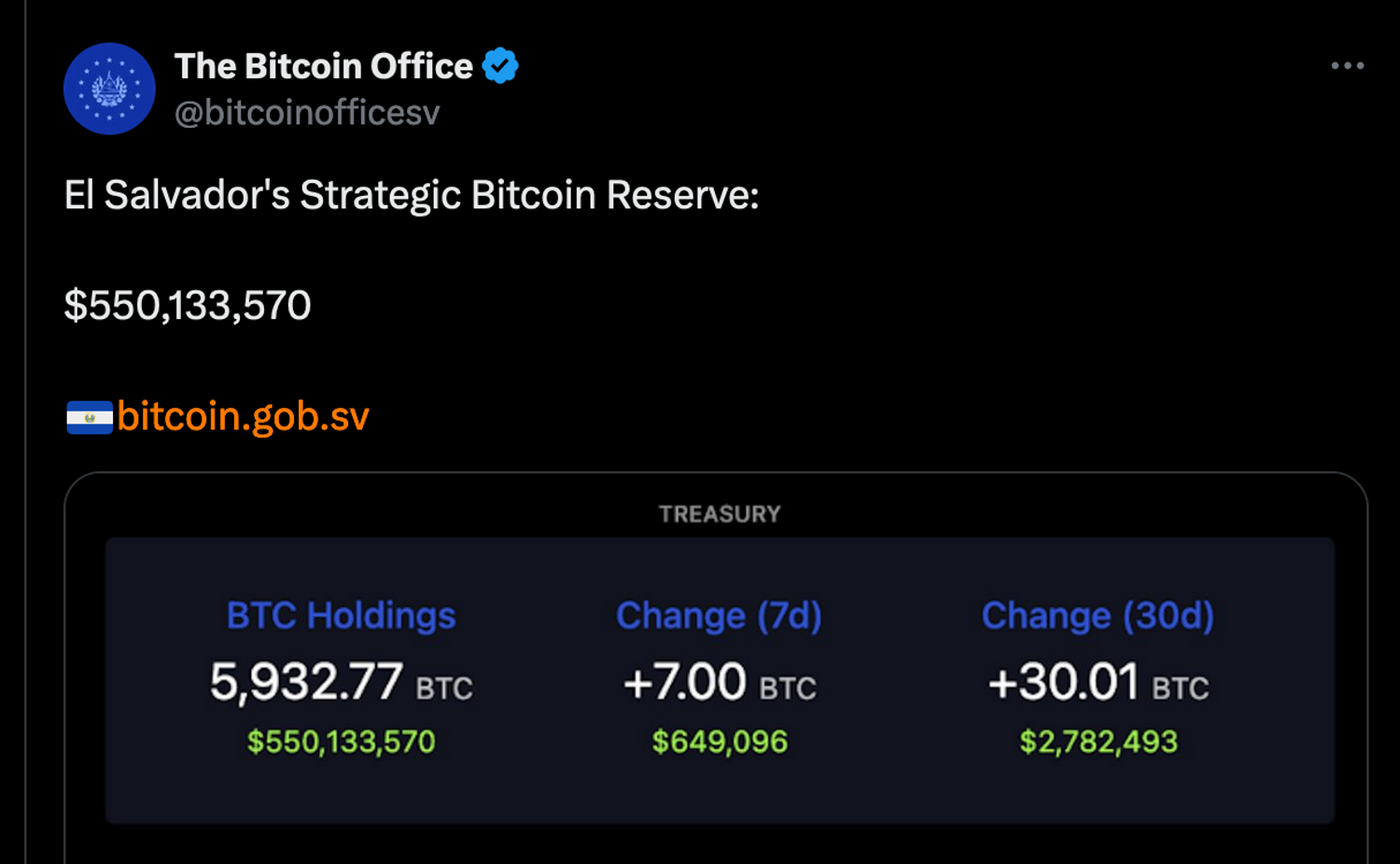
El Salvador: The first country to adopt Bitcoin as legal tender, El Salvador has actively acquired Bitcoin for national reserves. President Nayib Bukele’s government sees Bitcoin as a means to attract investment, promote financial inclusion, and reduce dependency on the U.S. dollar.
By holding Bitcoin, El Salvador seeks to reduce reliance on the U.S. dollar, which currently serves as its primary fiat currency. Bitcoin provides an alternative that is decentralized and not subject to monetary policies set by foreign governments.
Current U.S. Bitcoin Holdings
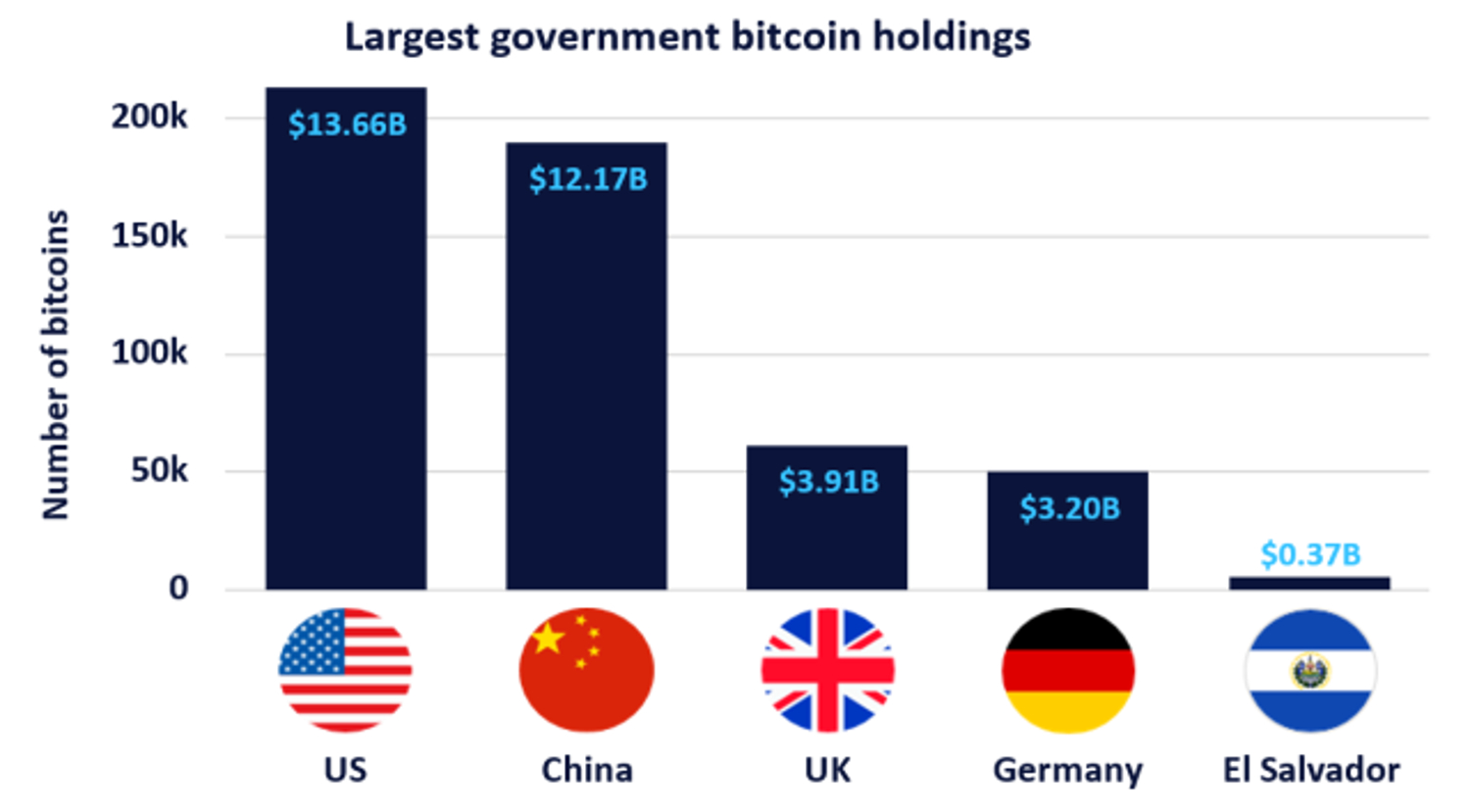
The United States government holds one of the largest Bitcoin reserves globally, but unlike El Salvador, these holdings are not the result of deliberate acquisition. Instead, they stem primarily from law enforcement seizures tied to criminal investigations. While significant in size, these assets currently lack a strategic designation, leaving room for debate about their optimal use.
Seized Assets: Details of Current Bitcoin Holdings
The U.S. government has accumulated Bitcoin through high-profile legal actions, including:
The Silk Road Seizures: One of the most notable cases involved the confiscation of Bitcoin from the Silk Road marketplace, a dark web platform shut down by the FBI in 2013. Over 69,000 bitcoins were seized in this operation.
The Bitfinex Hack Recovery: In 2022, the Department of Justice (DOJ) seized over 94,000 bitcoins related to the 2016 Bitfinex exchange hack. This marked the largest single cryptocurrency seizure in history.
Other Criminal Investigations: Smaller amounts of Bitcoin have been confiscated from ransomware attacks, money laundering schemes, and fraud cases.
As of late 2024, the U.S. government’s Bitcoin holdings are estimated to range between 203,000 and 213,000 bitcoins, valued at around $18 Billion at the current price. These figures make the United States the largest single governmental holder of Bitcoin.
Source: Yahoo Finance
Currently, the U.S. government primarily treats seized Bitcoin as an asset to be auctioned for cash. The U.S. Marshals Service has conducted numerous auctions since 2014, selling confiscated Bitcoin to private buyers, often at prices significantly lower than the cryptocurrency’s later market value.
Policy Gaps: Lack of an Official Reserve Designation or Strategic Framework
Despite holding a substantial amount of Bitcoin, the U.S. government lacks a coherent strategy for managing these assets. Key policy gaps include:
No Reserve Policy: Seized Bitcoin is treated as forfeited property, with no consideration of its potential as a reserve asset.
Lack of Long-Term Planning: The absence of a long-term framework results in missed opportunities to leverage Bitcoin’s growth for national benefit.
Unclear Custody Standards: While the DOJ and U.S. Marshals handle asset management, there is no standardized infrastructure for securely storing and managing large-scale cryptocurrency holdings.
Regulatory Ambiguity: Broader regulatory uncertainty surrounding cryptocurrency prevents cohesive decision-making about integrating Bitcoin into national reserves.
Potential Benefit: Reducing National Debt
The establishment of a Bitcoin Strategic Reserve presents numerous opportunities for the United States to strengthen its financial framework. By embracing Bitcoin as a core component of national reserves, the U.S. could enhance economic stability and create innovative pathways for addressing fiscal challenges, such as the national debt.
The United States faces a mounting national debt, exceeding $33 trillion as of 2024. A Bitcoin Strategic Reserve could offer an innovative approach to addressing this challenge:
Long-Term Appreciation: Bitcoin’s historical price trajectory demonstrates significant long-term growth, despite short-term volatility. A strategic reserve held over decades could generate substantial value, potentially offsetting portions of the national debt.
Non-Traditional Revenue Source: Selling a portion of the reserve at peak market cycles could provide a non-tax-based revenue stream, alleviating fiscal pressures without burdening taxpayers.
Debt Reduction Impact: By applying gains from Bitcoin sales to debt reduction, the U.S. could reduce interest payments on outstanding debt, freeing up resources for critical infrastructure or innovation projects.
While this strategy carries risks, such as Bitcoin’s volatility, it aligns with the principle of investing in high-growth assets for long-term national benefit.
Legislative Initiatives: The BITCOIN Act of 2024
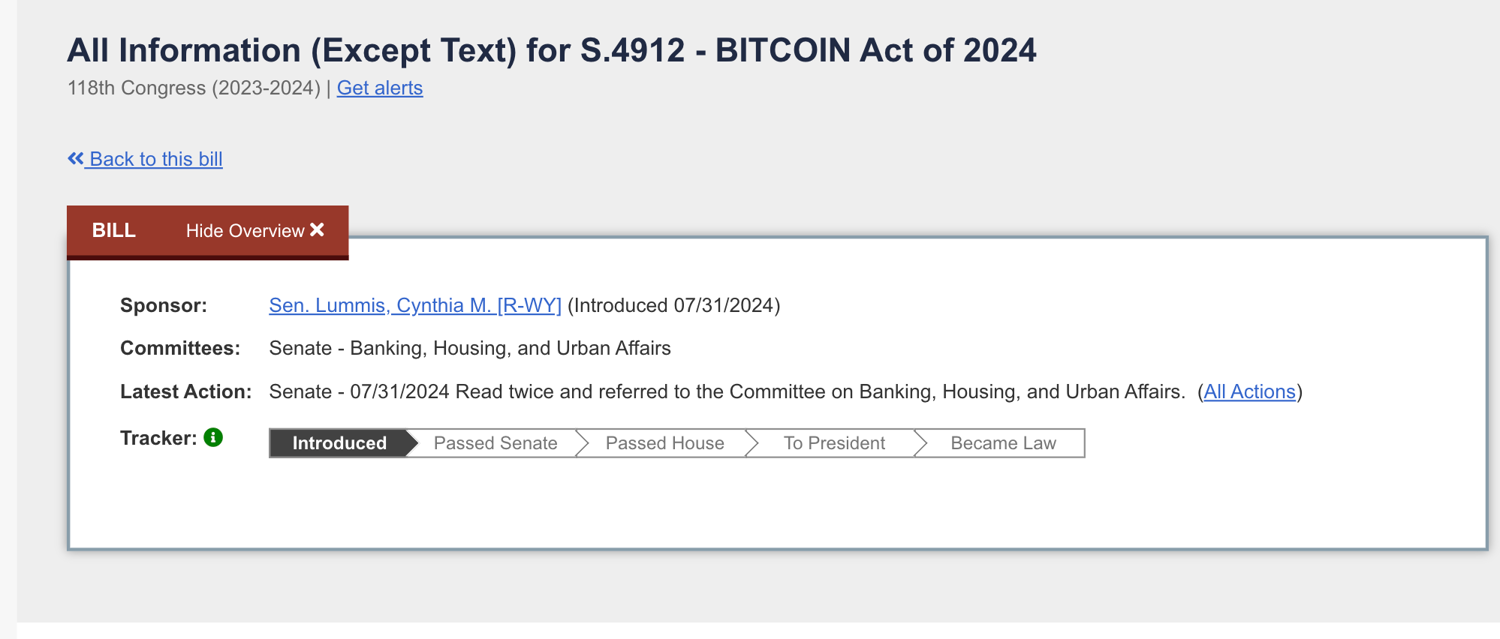
Senator Cynthia Lummis, a long-time advocate for cryptocurrency adoption, introduced the BITCOIN Act in July 2024. The proposed legislation underscores the strategic importance of Bitcoin as a national asset, framing it as both a hedge against traditional financial system vulnerabilities and a tool to enhance economic competitiveness.
The Act calls for the U.S. Treasury to acquire and maintain a Bitcoin reserve, which would operate alongside existing reserves like gold and foreign currencies.
Source: https://www.congress.gov/bill/118th-congress/senate-bill/4912/all-info
The BITCOIN Act outlines several critical elements for establishing and managing the proposed Strategic Bitcoin Reserve:
Acquisition Strategy:
The Treasury is directed to acquire up to 1 million bitcoins over a five-year period, representing approximately 5% of Bitcoin's total supply.
Purchases would be conducted during periods of market correction to optimize acquisition costs.
Funding Mechanisms:
The program would be funded by reallocating existing federal reserve and Treasury funds, minimizing the need for new taxpayer revenue.
Profits from Bitcoin appreciation would be reinvested or allocated toward national debt reduction.
Holding Requirements:
Bitcoin held in the reserve must be retained for a minimum period of 20 years.
The Act mandates the creation of a secure, decentralized network of digital vaults to protect the assets from theft or cyberattacks.
As of November 2024, the BITCOIN Act of 2024 remains under consideration in the U.S. Senate. The recent election of President Donald Trump, who has expressed support for integrating Bitcoin into national financial strategies, has renewed interest in the Act. Despite this renewed interest, the Act has not yet advanced to a Senate vote. Debates continue regarding the potential benefits and risks of establishing a Bitcoin reserve, including concerns about Bitcoin's volatility and the implications of such a significant government investment in cryptocurrency.
Conclusion
Bitcoin’s unique attributes—its finite supply, decentralized nature, and growing global adoption—make it a compelling addition to traditional reserve assets. A strategic reserve could enhance economic stability, offer a novel avenue for debt mitigation, and strengthen the U.S. dollar's global dominance. At the same time, the challenges of volatility and security demand thoughtful policies and robust risk management frameworks.
As the legislative debate surrounding the BITCOIN Act of 2024 unfolds, the broader implications of such a move extend far beyond national borders. Adopting Bitcoin as part of a reserve strategy could inspire other nations to follow suit, transforming how governments perceive and utilize digital assets. It could also accelerate global adoption of blockchain technologies, further embedding cryptocurrencies into the fabric of the international financial system.